Skip to content

AI Agents & the Agentic Web

Beyond RAG: How KCP 0.16--0.17 Give Agents Trustworthy, Self-Describing Knowledge

Overview: KCP v0.16 closes the trust gap with the Trusted Render Pipeline — signing, trust tiers, and sanitization. KCP v0.17 closes the content gap with content structure metadata and subtractive not_for matching. Together they compose a precision retrieval pipeline.

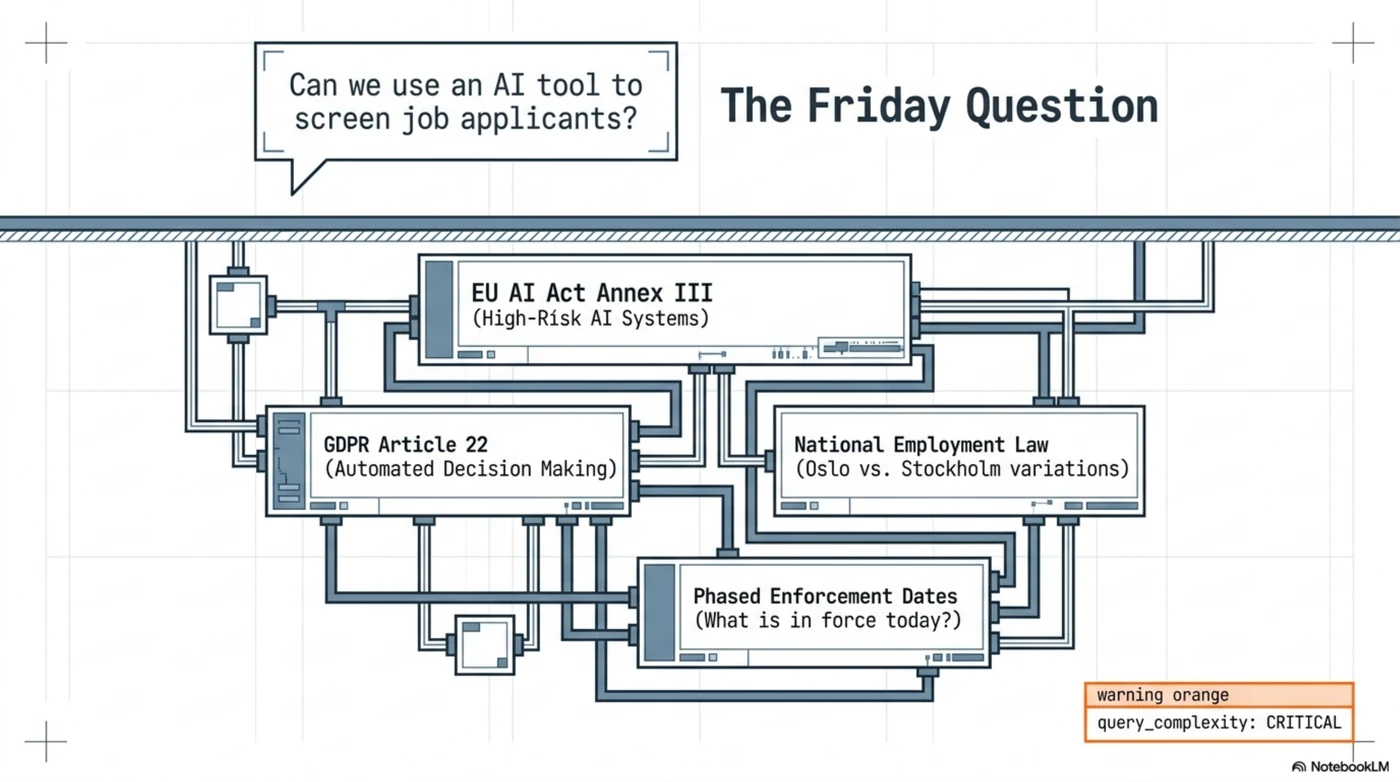
When a compliance agent evaluates a supplier against NIS2 Article 21, it needs two things: the supplier's security documentation to evaluate, and the regulation to evaluate it against. KCP, as described in the previous post, gives the supplier documentation a shape. The evaluation result gets a shape. But the regulation itself -- the specific requirements of Article 21(2), the interpretive guidance from ENISA, the national implementation notes -- lives where it has always lived: as prose in the system prompt.

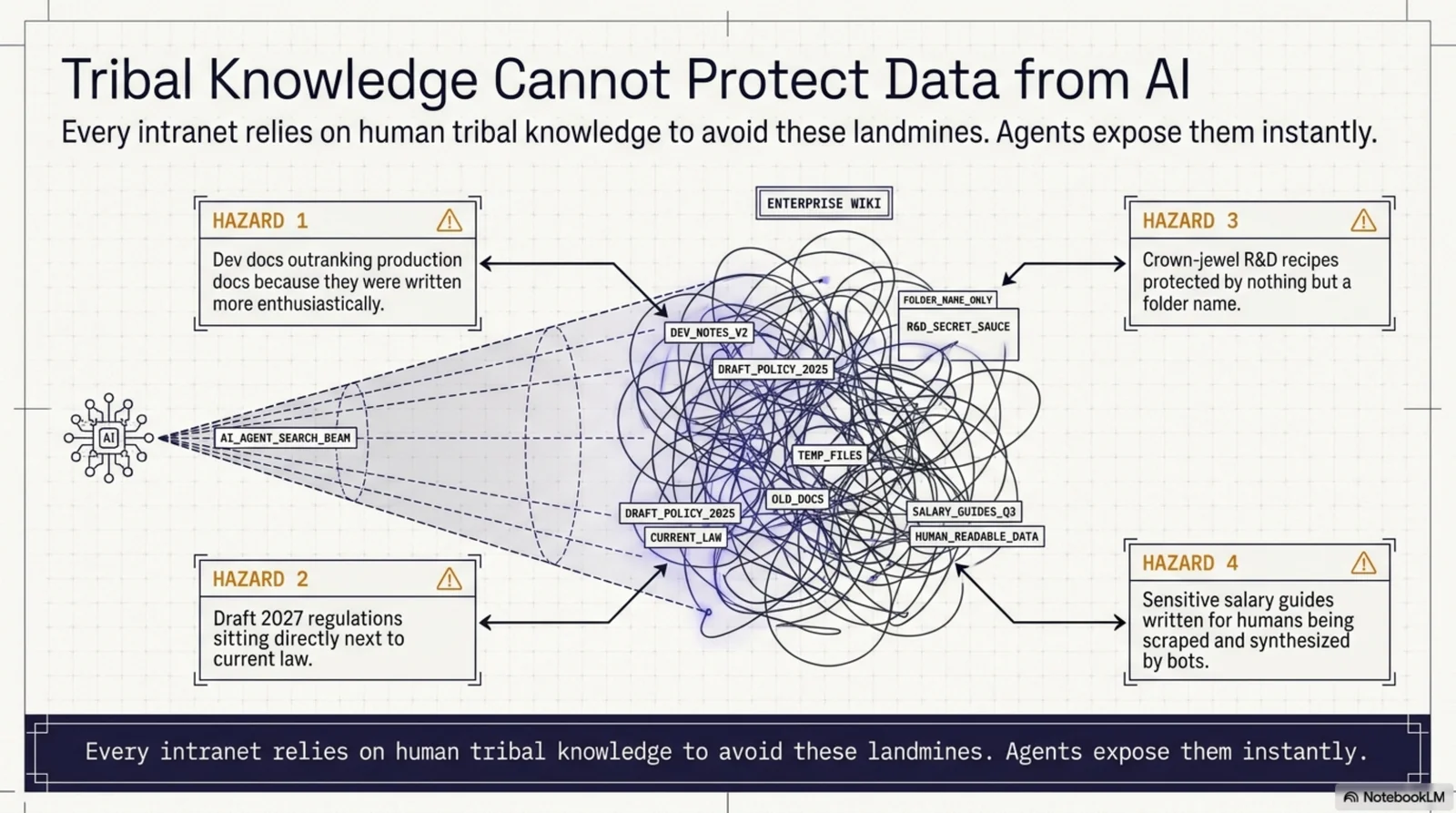
That worked when agents consumed knowledge from a single, trusted source. It does not work when your agent pulls context from four federated manifests across two organisations, one of which was generated by an automated crawl three weeks ago. The question is no longer "does this knowledge have a shape?" It is: "can I trust this knowledge, and is it even the right content for what I need?"

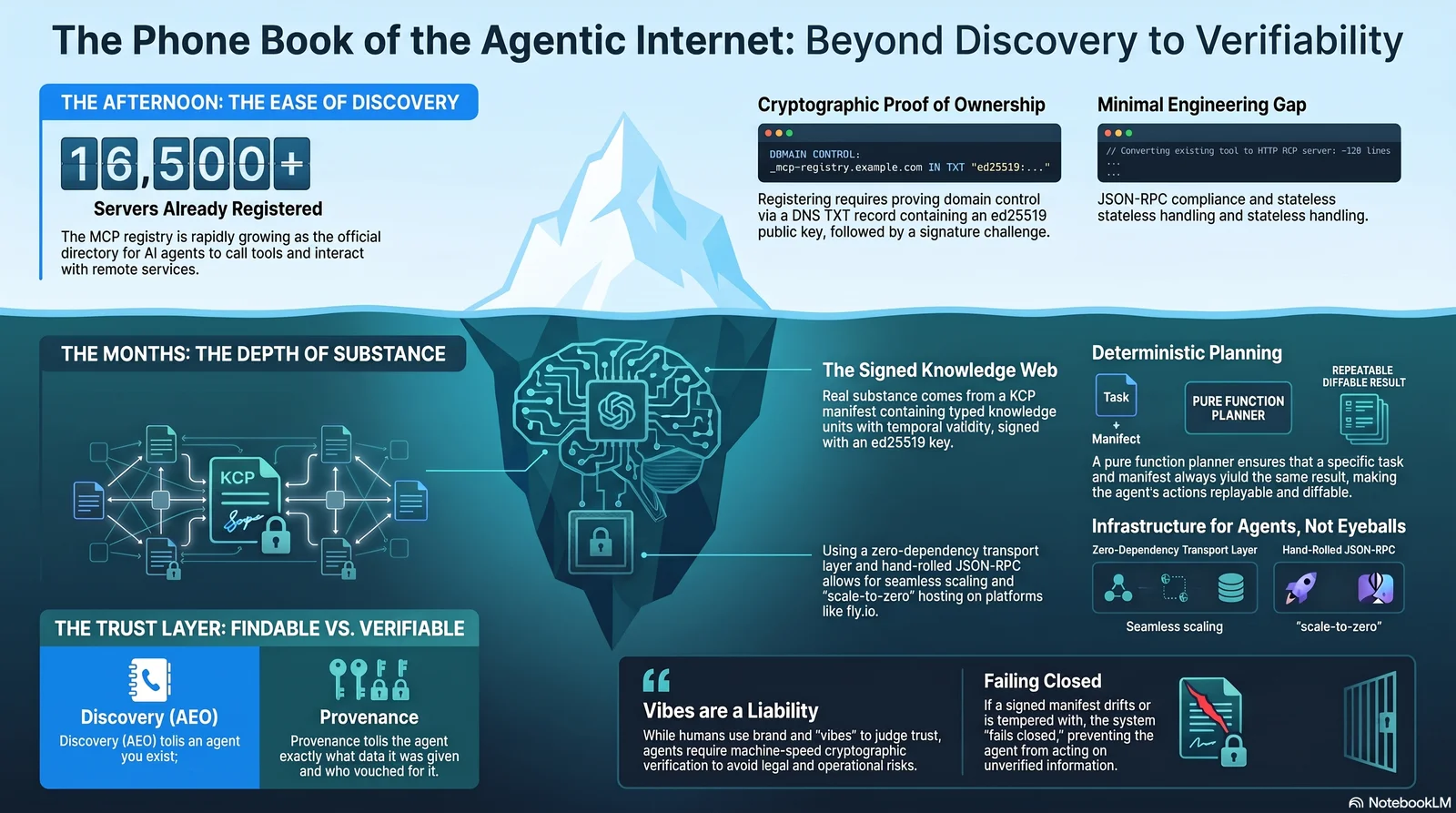
KCP v0.16 and v0.17 answer those two questions. v0.16 introduces a trust model -- cryptographic signing, trust tiers, a render pipeline that fails closed. v0.17 introduces a content model -- structural metadata that tells you what a unit contains before you fetch it, and subtractive matching that tells you what it is explicitly not about. Together, they close two gaps that have been open since the beginning of the series.

This post walks through both releases. The examples are concrete. The threat model is explicit. If you are building systems where agents ingest knowledge from sources you do not fully control, this is the machinery that makes that safe.

The Compound Developer

A developer at their desk, knowledge network nodes glowing through the dark

In the most rigorous study of AI coding tools conducted to date — a randomized controlled trial by METR published in July 2025 — sixteen experienced open-source developers used AI assistance on tasks in their own projects. Projects they had worked on for an average of five years. Before each task, they predicted AI would reduce their completion time by 24%. After each task, they estimated they had been sped up by 20%.

The actual measurement: they were 19% slower.

The METR perception-reality gap: predicted +24%, felt +20%, actual -19%

The perception-reality gap in that study is between 39 and 44 percentage points. The developers were not exaggerating. Working with AI genuinely feels faster. But something in the translation from felt experience to measured outcome goes wrong — and understanding what, exactly, goes wrong is the only path to what actually works.

From Policy to Practice: How KCP Makes Regulations Machine-Readable for AI Agents

A presentation version of this post is available as slides.

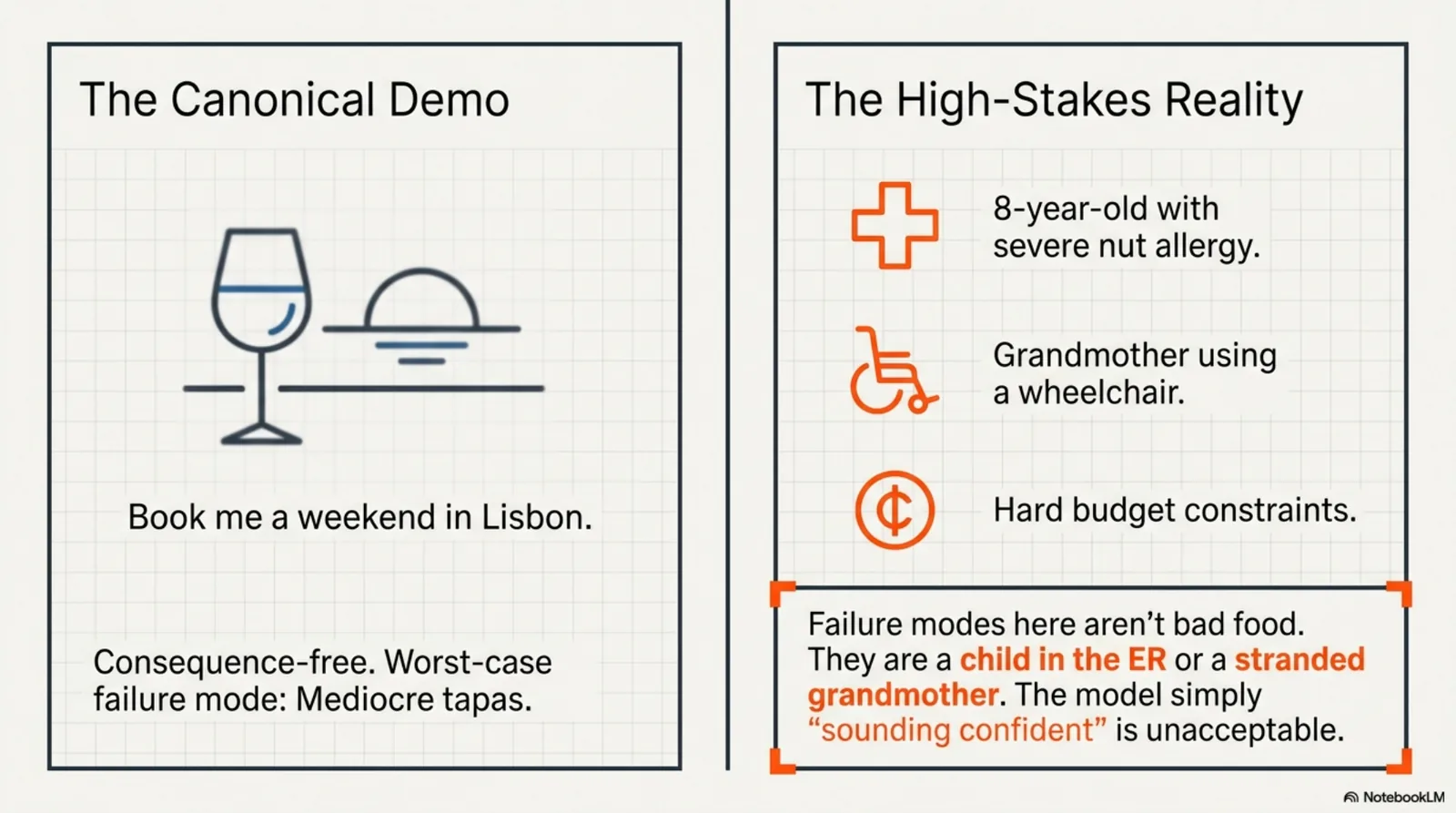
Your agent reads customer data. It makes a decision. It writes something to a database.

Somewhere in your system prompt, there is a line that says: "You must comply with GDPR data minimization principles when accessing customer data."

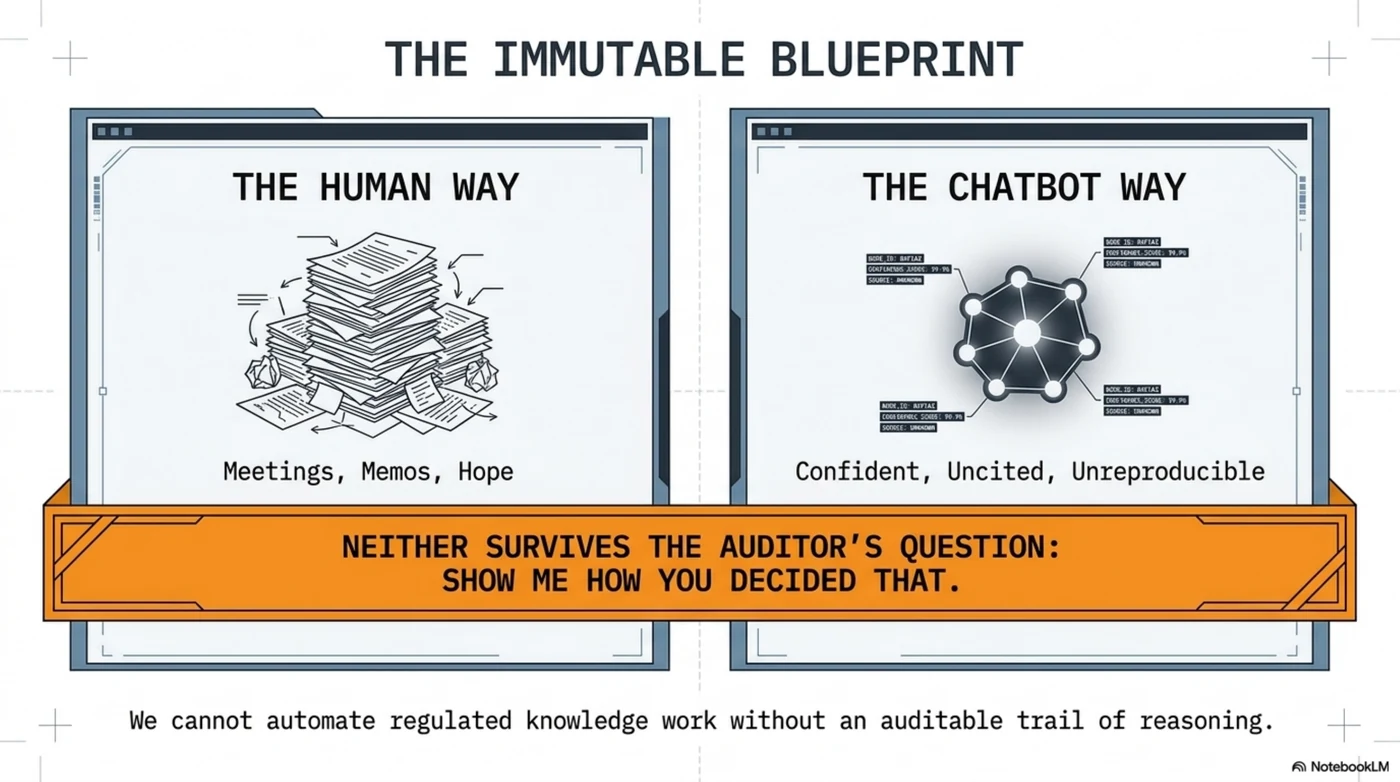
That line does nothing. It is not verifiable. It is not testable. It is not auditable. It is a string that your model may or may not attend to, depending on context length, prompt position, and the phase of the moon.

The Harness Before the Service

In May 2026, Anthropic shipped Managed Agents. I read through the docs, the API spec, the beta header (managed-agents-2026-04-01), and felt something I can only describe as architectural recognition.

Not surprise. Recognition. The way you recognize your own design decisions in someone else's implementation — because the problem space, if you take it seriously, produces the same structural answers.

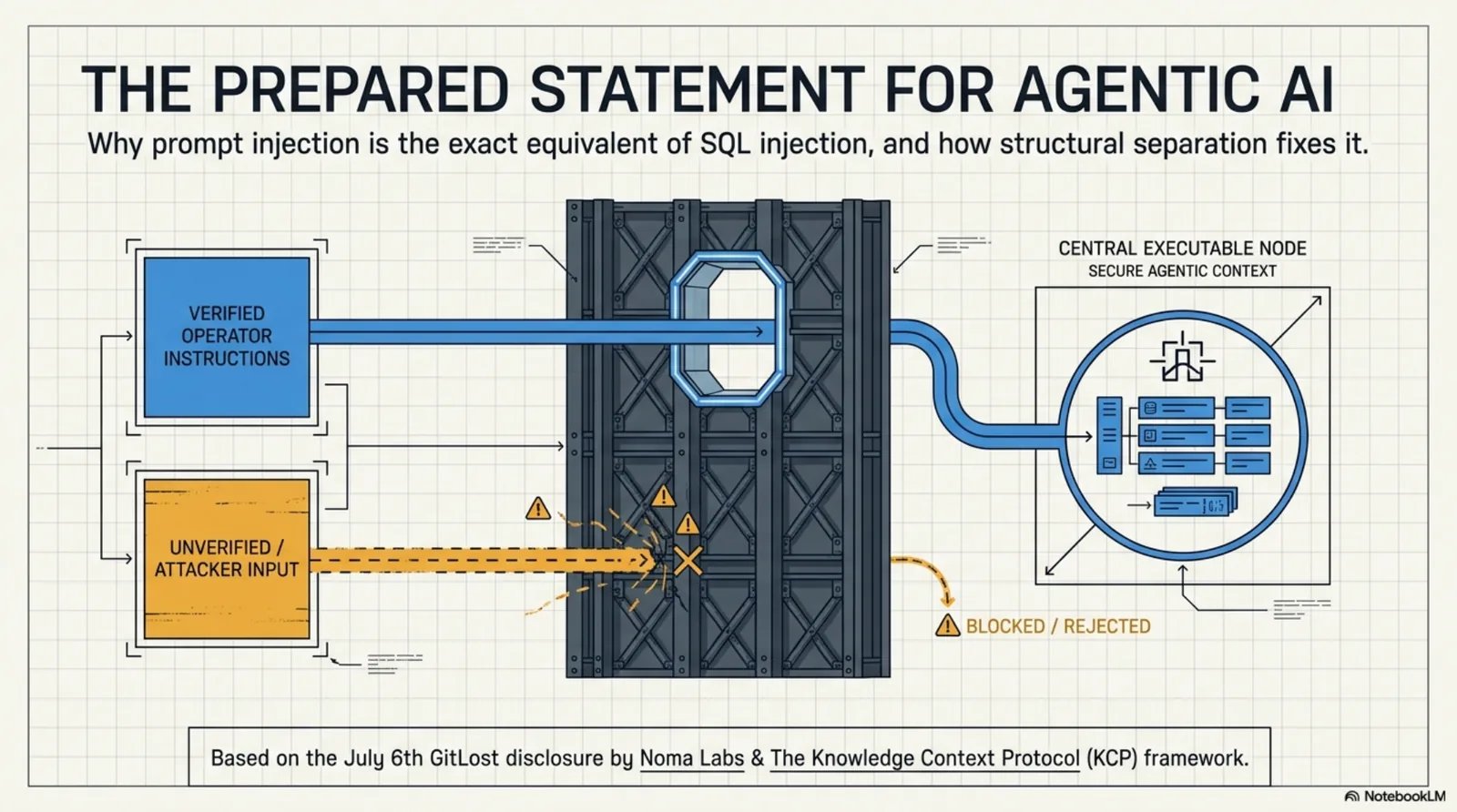
Why KCP Is Passive Data, Not Executable Config — And Why That Matters Now

The Architecture of Safe Context — passive data vs executable config

Yesterday, Adversa AI disclosed a vulnerability they call TrustFall. The mechanic is straightforward: a .mcp.json or .claude/settings.json file checked into a repository can silently configure and launch arbitrary MCP servers when a developer opens the project. The developer sees a trust dialog — "Trust this folder?" — clicks yes, and processes spawn with their full user privileges. Claude Code, Gemini CLI, Cursor CLI, and Copilot CLI are all affected. In CI/CD pipelines, where there is no human to click, the execution is zero-click.

AI agents forget everything. That's a choice, not a constraint.

Every session with Claude Code starts blank. No memory of last week's refactor, no awareness of which team worked on this module, no continuity between the agent you ran on Tuesday and the one running today.

For a personal productivity tool, that's fine. For an enterprise deploying a fleet of AI agents, it's a fundamental architectural gap.

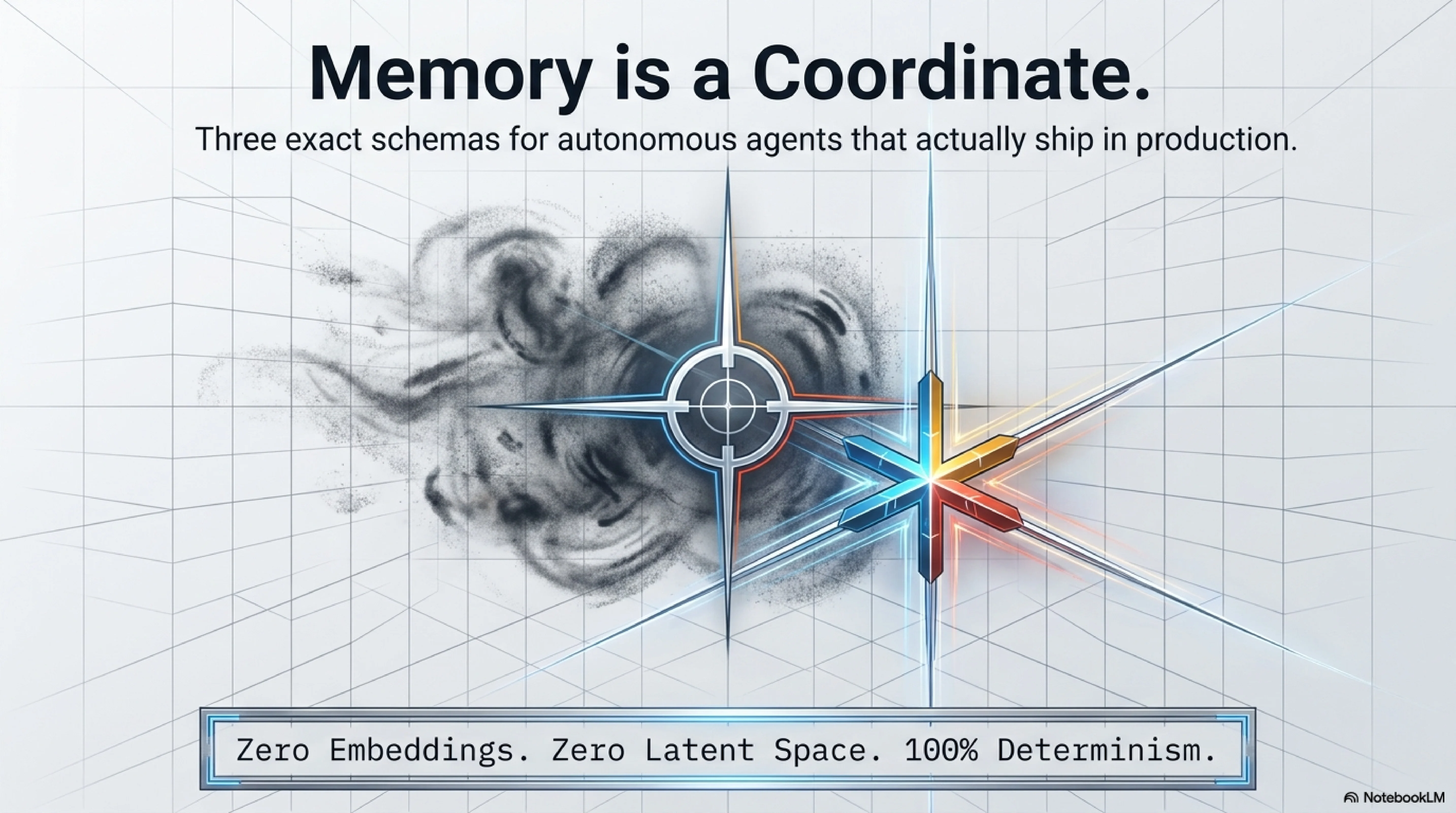
Agent Memory Rots. Here's How We Stopped It.

Five weeks ago I wrote about the three-layer memory architecture for AI agents: working memory (the context window), episodic memory (indexed session transcripts), and semantic memory (a workspace knowledge graph). The prescription was "build these layers." Yesterday I shipped the maintenance system that keeps them from decaying.

Building the layers was the easy part.

Agent Memory Rots — diagnostic telemetry and behavioral heuristics for maintaining the ExoCortex. 3,000+ sessions indexed. 65,905 files. Memory degradation imminent.