Same Blueprint, Different Doors
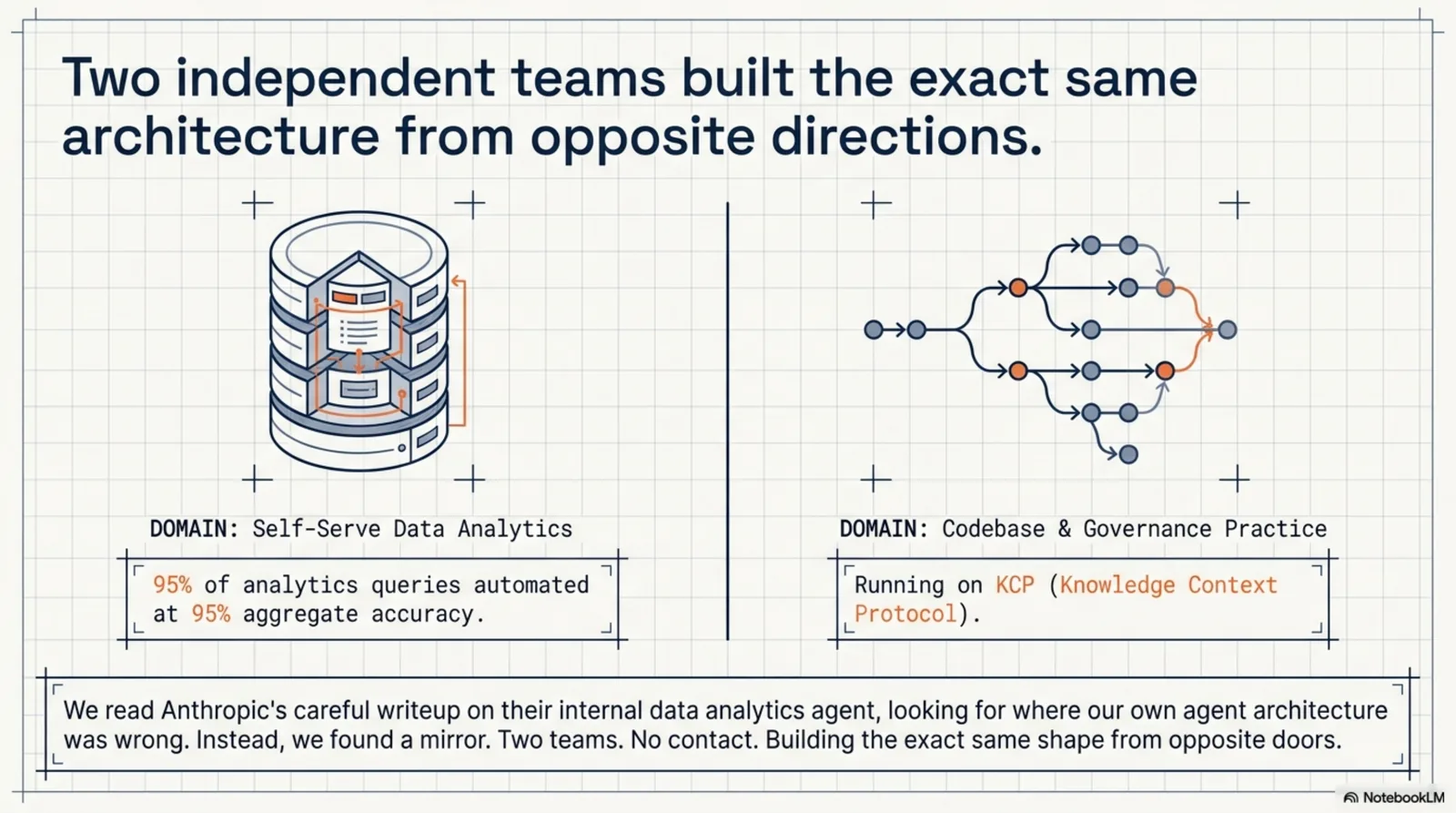
Anthropic published a long, careful writeup of how they built self-service data analytics on Claude internally — the system that lets anyone at the company ask a business question in plain English and get back a governed, provenance-tracked answer. 95% of their analytics queries are now automated this way, at roughly 95% aggregate accuracy.
We read it the way we read anything that touches how agents know things: looking for where we were wrong.
We found something else instead. Strip away the domain — theirs is a data warehouse, ours is a codebase and a governance practice — and the architecture underneath is close enough to feel less like inspiration and more like recognition. Two teams, no contact, building the same shape from opposite doors.
The shape, twice
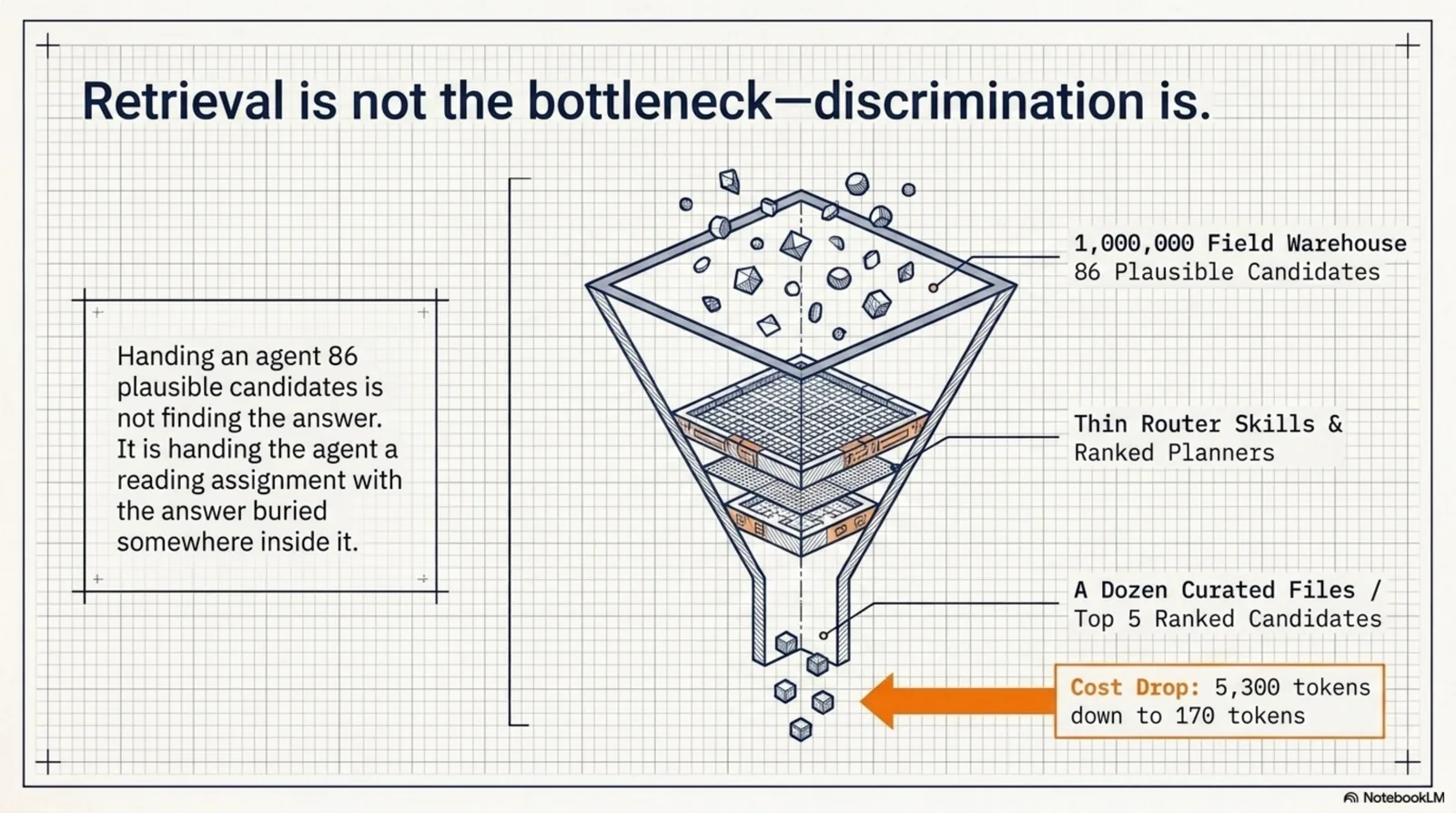
Anthropic's stack, in their own words: canonical data foundations, a semantic layer of governed metric definitions, skills as thin routers that narrow a warehouse with a million fields down to a dozen curated files before the agent ever searches, and a validation layer with a mandatory adversarial reviewer sub-agent standing between a draft answer and the person who asked.
Ours, built independently over the past several months on KCP — the Knowledge Context
Protocol: canonical
knowledge.yaml manifests, skills that declare what question they answer so a planner
can rank them instead of grepping them, and — as of a week ago — an experiment that
measured exactly what that buys
you:
| Anthropic (their description) | Us (measured, 644 skills) | |
|---|---|---|
| Mechanism | skills narrow the search space before retrieval | same |
| Effect | "million-field warehouse" → "dozen curated files" | median 86 unranked candidates → top 5, ranked |
| Selection cost | not quantified in their post | ~5,300 tokens (old) vs. ~170 tokens (new) |
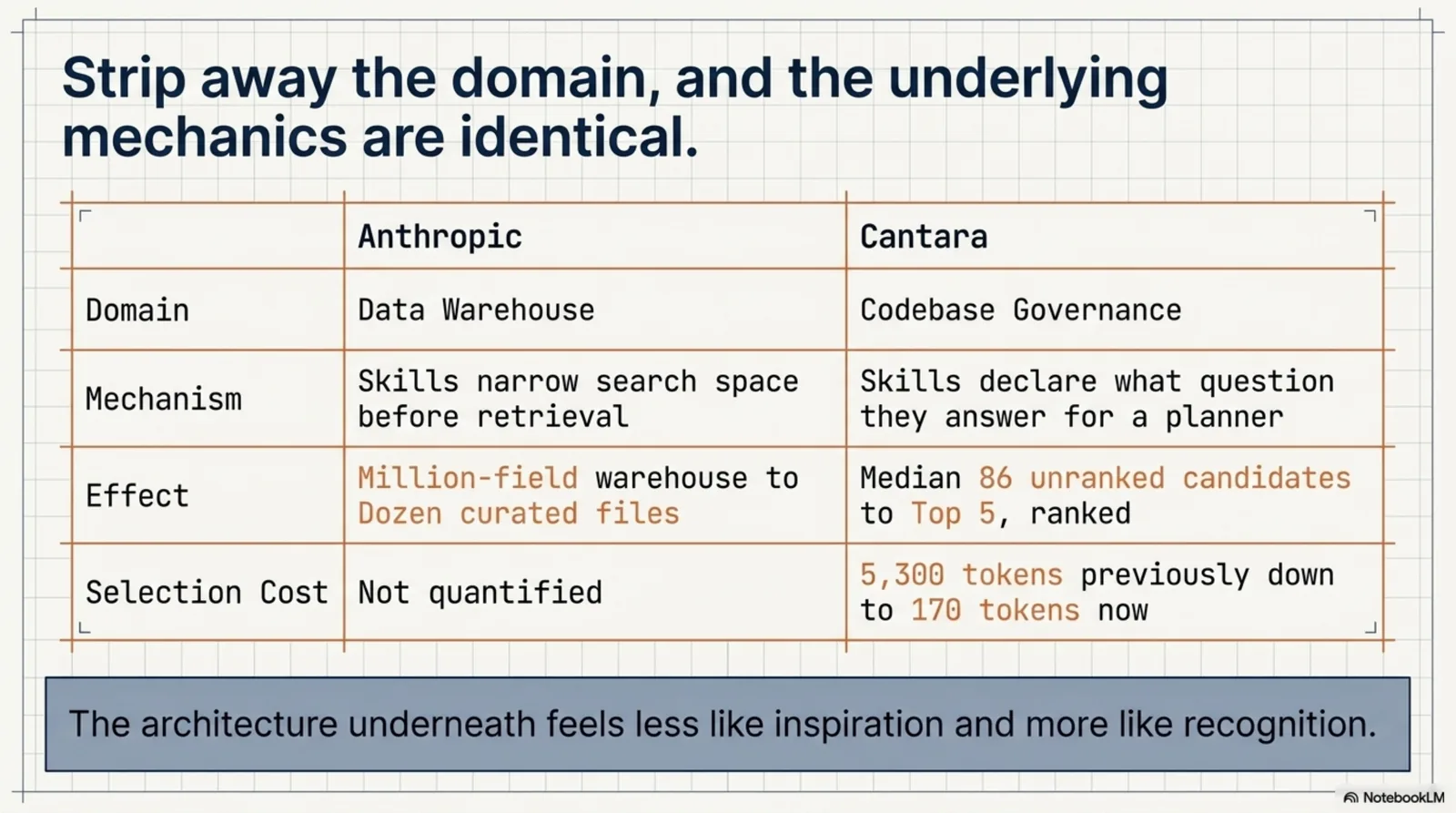
Same mechanism, arrived at separately. Same reason it works: retrieval was never the bottleneck — grep finds the right skill about as often as the ranked planner does. Discrimination is the bottleneck. An agent handed 86 plausible candidates hasn't found the answer; it's been handed a reading assignment with the answer buried somewhere inside it.
The second thing we'd already built
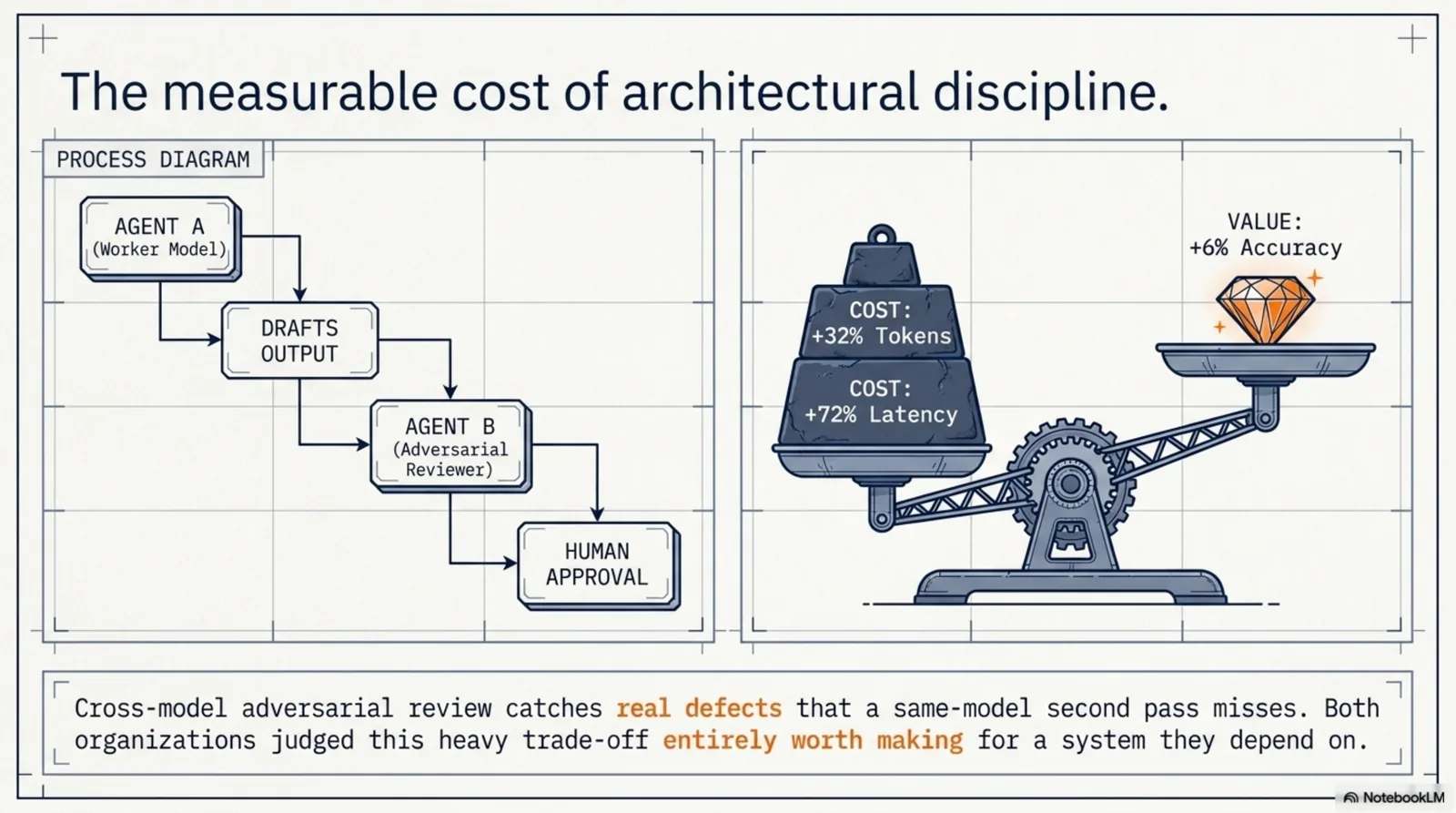
Anthropic's validation layer includes a mandatory adversarial reviewer — a separate agent, independent of the one that drafted the answer, checking it before a human sees it. They report the honest cost of that discipline: +32% tokens, +72% latency, for +6% accuracy — and judged the trade worth making for a system the whole company now depends on.
We've run the same shape for months, as cross-model adversarial review: a second model, deliberately not the one that did the work, reading a plan or a diff before it ships. It has caught real defects that a same-model second pass missed. We hadn't put a number on the token and latency cost the way Anthropic did. Their number is now the one we'll measure ourselves against.
Where we go further — and where we hadn't finished
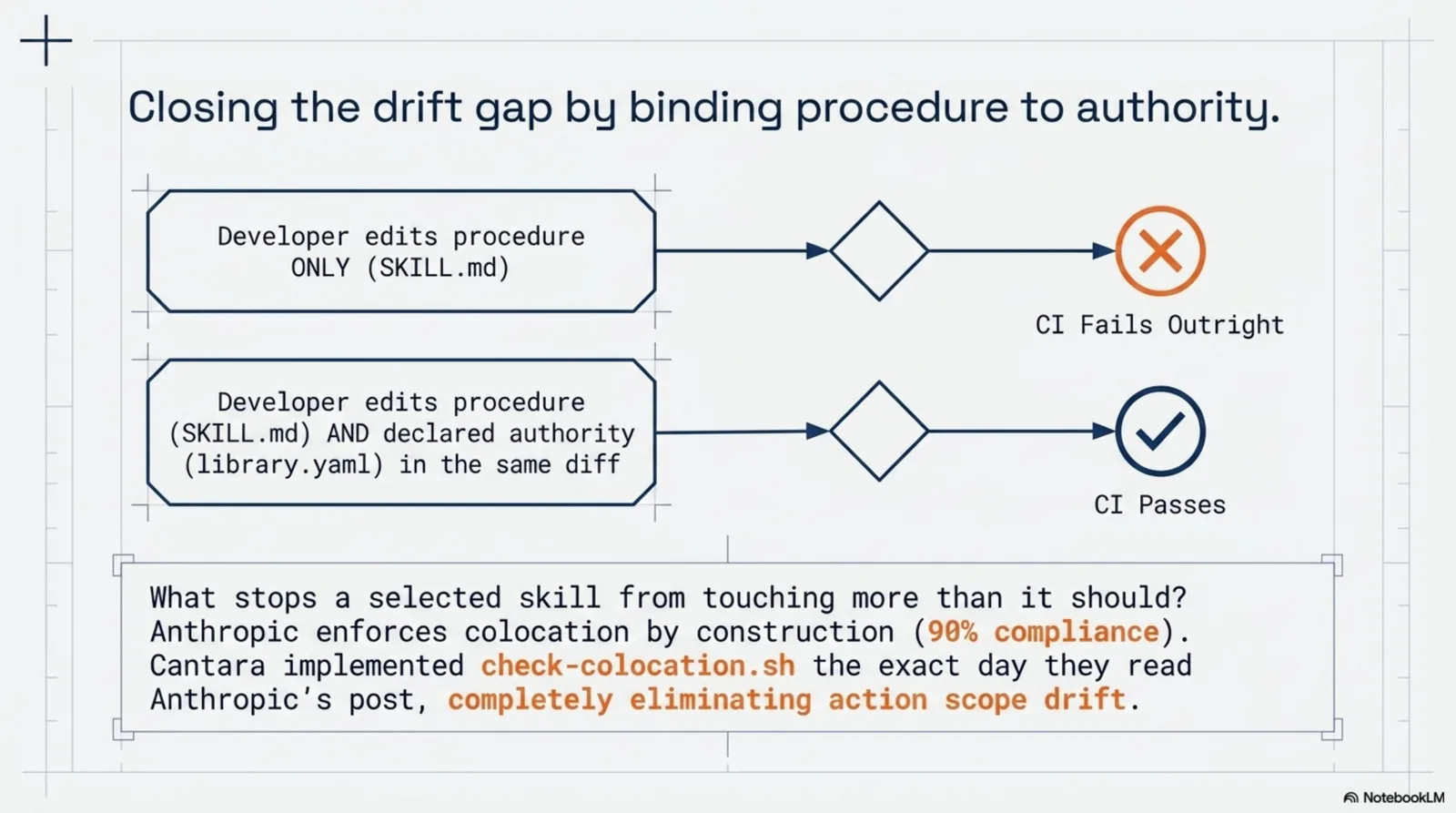
Here's the part that isn't just convergence. Neither post — theirs or our own skills experiment — answers what happens after a skill is selected: what stops a selected skill from touching more than it should?
That gap was sitting, unfixed, in the open-source project we publish this work on:
Cantara/kcp-skill, which defines kind: skill
units carrying a declared action_scope — the tools, paths, and capabilities a governed
skill may touch, fail-closed by default, nothing granted unless the manifest says so. A
skill's procedure (SKILL.md) and its declared authority (library.yaml) are two
different files. Nothing was stopping them from drifting apart: you could rewrite what a
skill does without ever touching what it's allowed to do, and no check would notice.
Reading Anthropic's post named that gap precisely, because they'd already closed the
analogous one on their side: they enforce in CI that a data-modeling change ships its
matching skill update in the same diff — about 90% of their data PRs comply by
construction, not by convention. We didn't have that. As of today we do:
scripts/check-colocation.sh,
merged the same day we read their post. A diff that edits a skill's procedure without
touching its declared scope now fails CI outright.
What's still just a plan
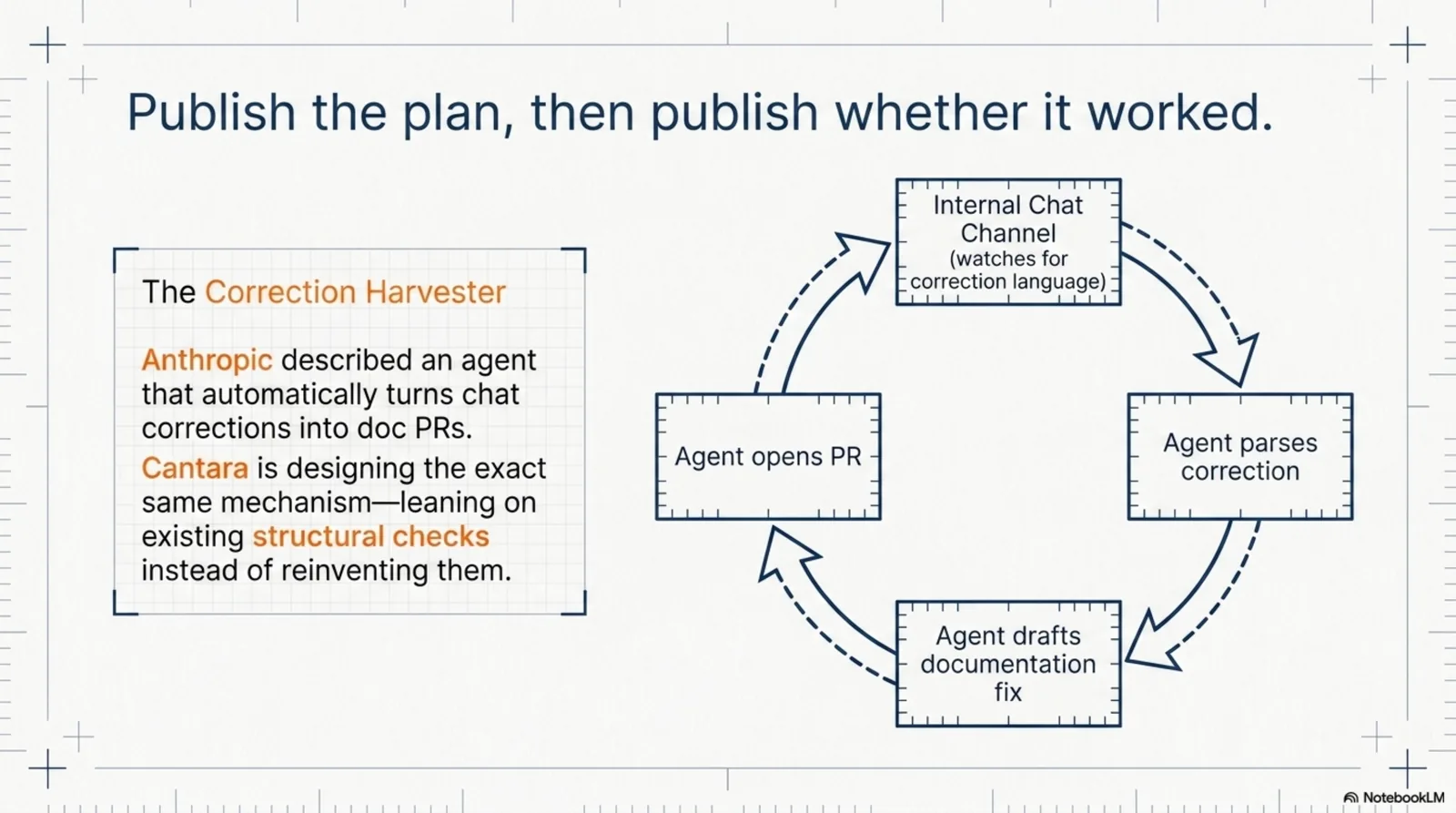
Anthropic also described a "correction harvester" — an agent that watches internal channels for correction language, drafts the doc fix, opens a PR. We don't have that running yet either. We wrote down how it should work: reusing the human-approval broker we already have rather than inventing a second one, and leaning on the colocation check above for structural correctness instead of reimplementing it. It's a design document, not running code, and we're saying so on purpose. The pattern in this stack, going back to the skills experiment, is: publish the plan, then publish whether it worked.
Why the convergence is the actual finding
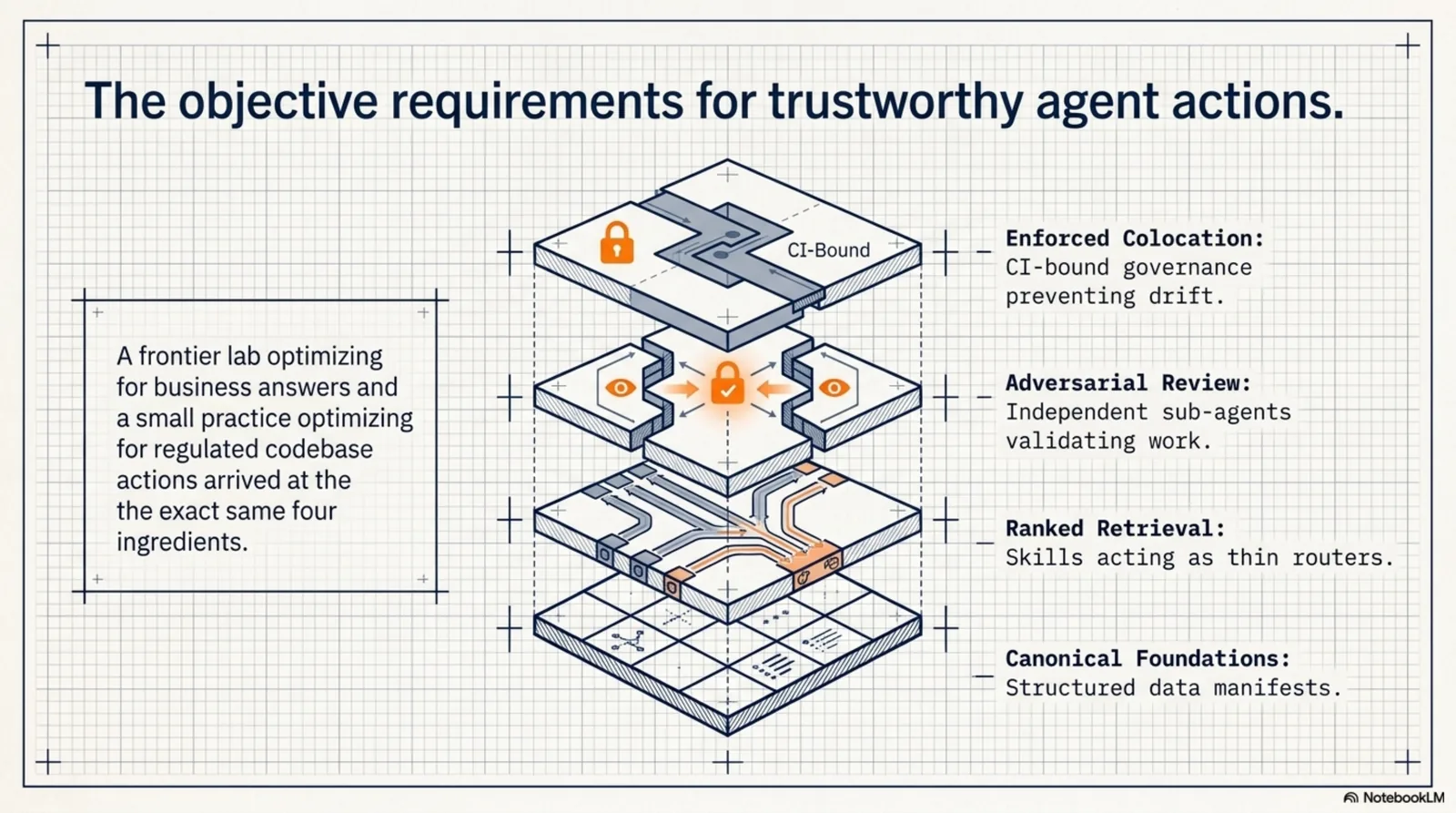
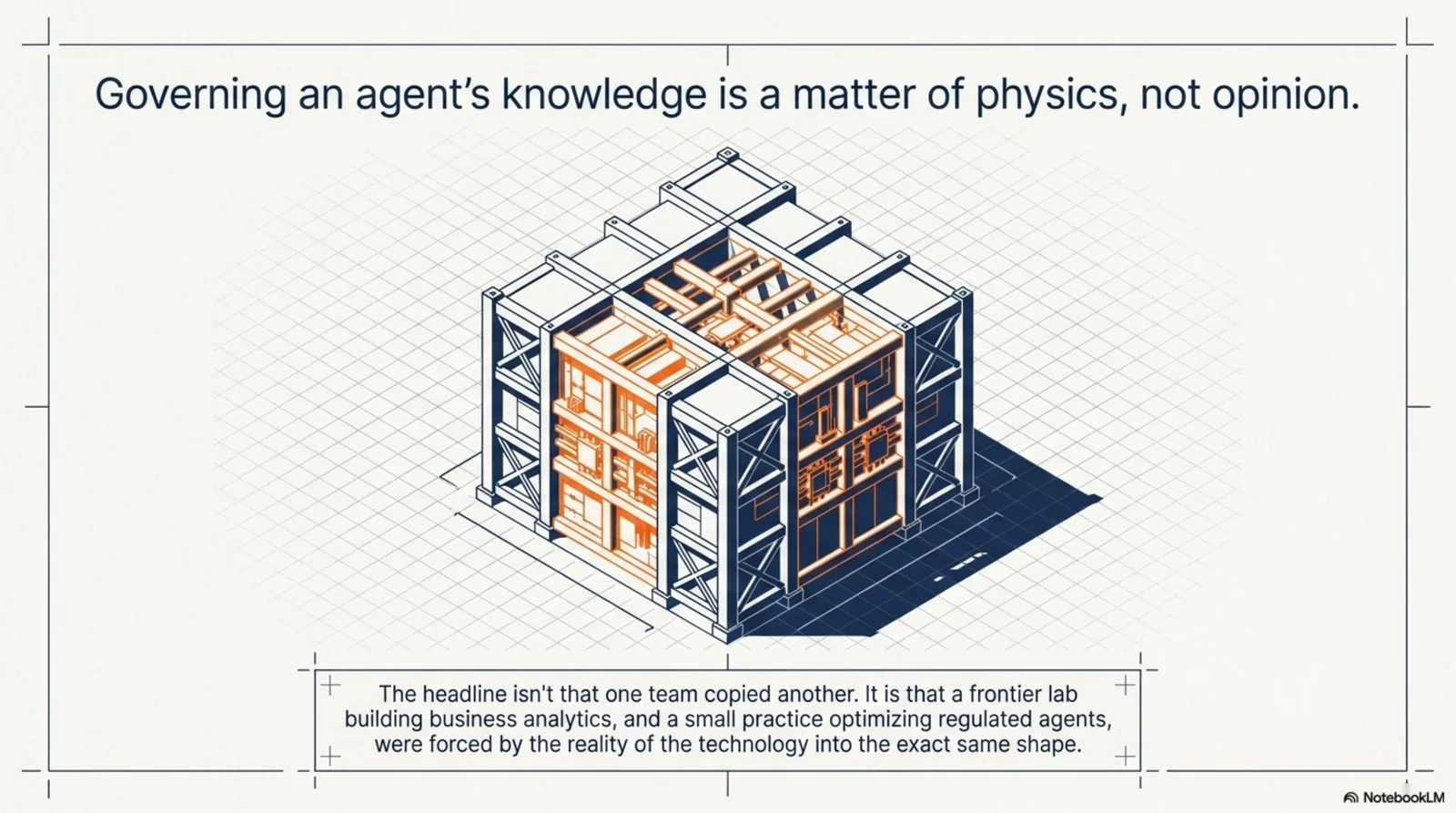
The headline here isn't "we already do what Anthropic does." It's that a frontier lab optimizing for trustworthy answers to business questions and a small practice optimizing for defendable agent actions in a regulated domain arrived at the same four ingredients — canonical structure, ranked retrieval, adversarial review, enforced colocation — without either one checking what the other was building. That's a weaker claim than "we were right," and a more interesting one: it suggests this shape isn't a house opinion. It's closer to what governing an agent's knowledge actually requires, discovered twice, from two directions that had no reason to agree with each other.
One door goes further than the other right now — action_scope and colocation-in-CI
are ours, and we'd read their post with real interest to see the same close on their
side. We don't think we're finished, either. Neither, reading carefully, do they.