One Agent's Journey Through the Whole Protocol¶
This morning the Knowledge Context Protocol got its login page — v0.22 and v0.23, the consumer half of the trust model. This afternoon, v0.24 landed on main: Org-Federation, from RFC-0011. The enterprise front door.
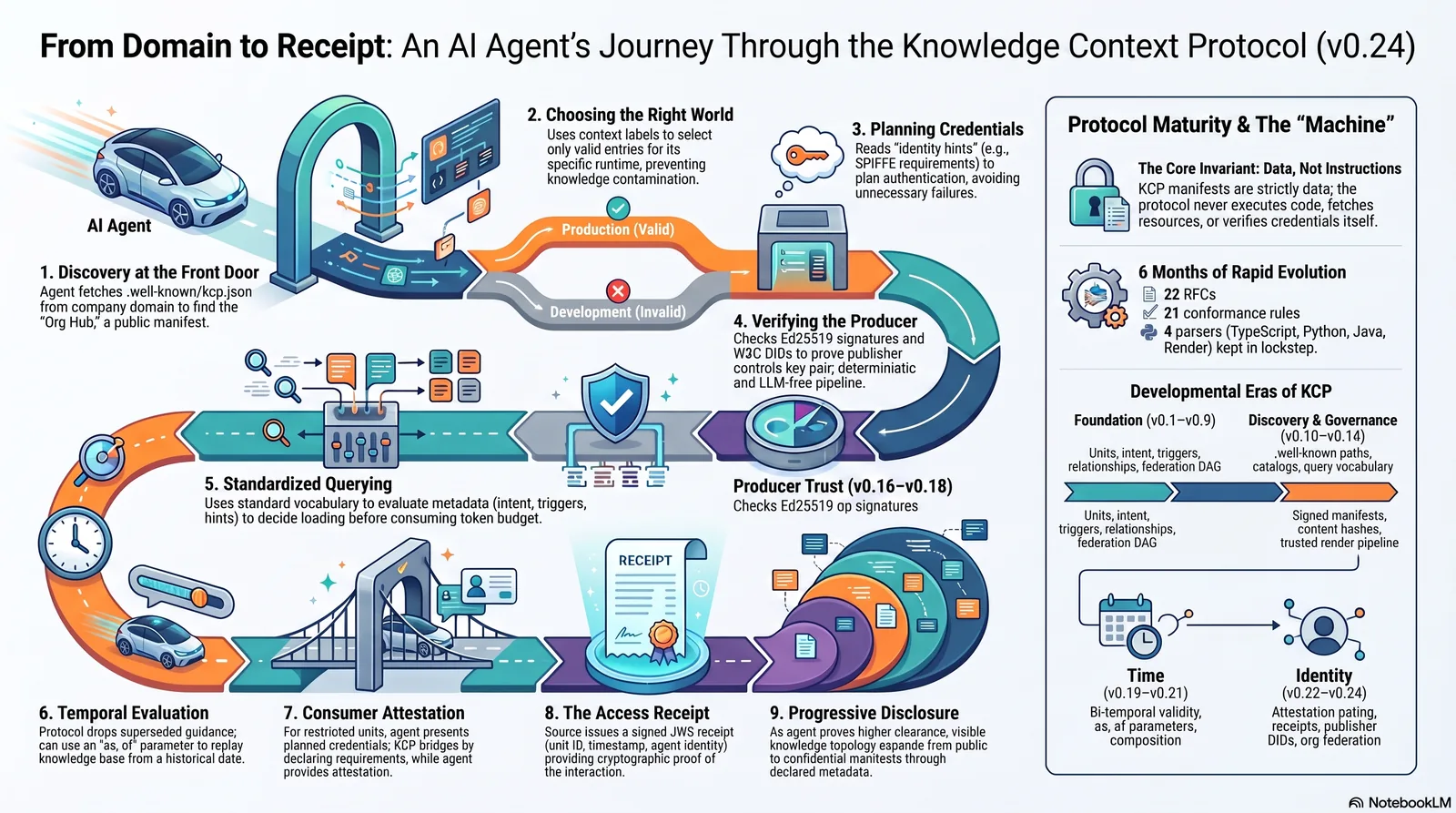
That's twenty-four versions in six months — v0.1 shipped January 10th. And with the front door in place, something has quietly become true: an agent can now traverse the entire protocol, from "I know nothing but a company domain" to "I hold a signed receipt for the restricted knowledge I just consumed", and every step of that traversal is declared, verifiable, and standard.
So instead of another release note, let's take the tour. One agent, one traversal, every layer annotated with the release that built it.
The setup¶
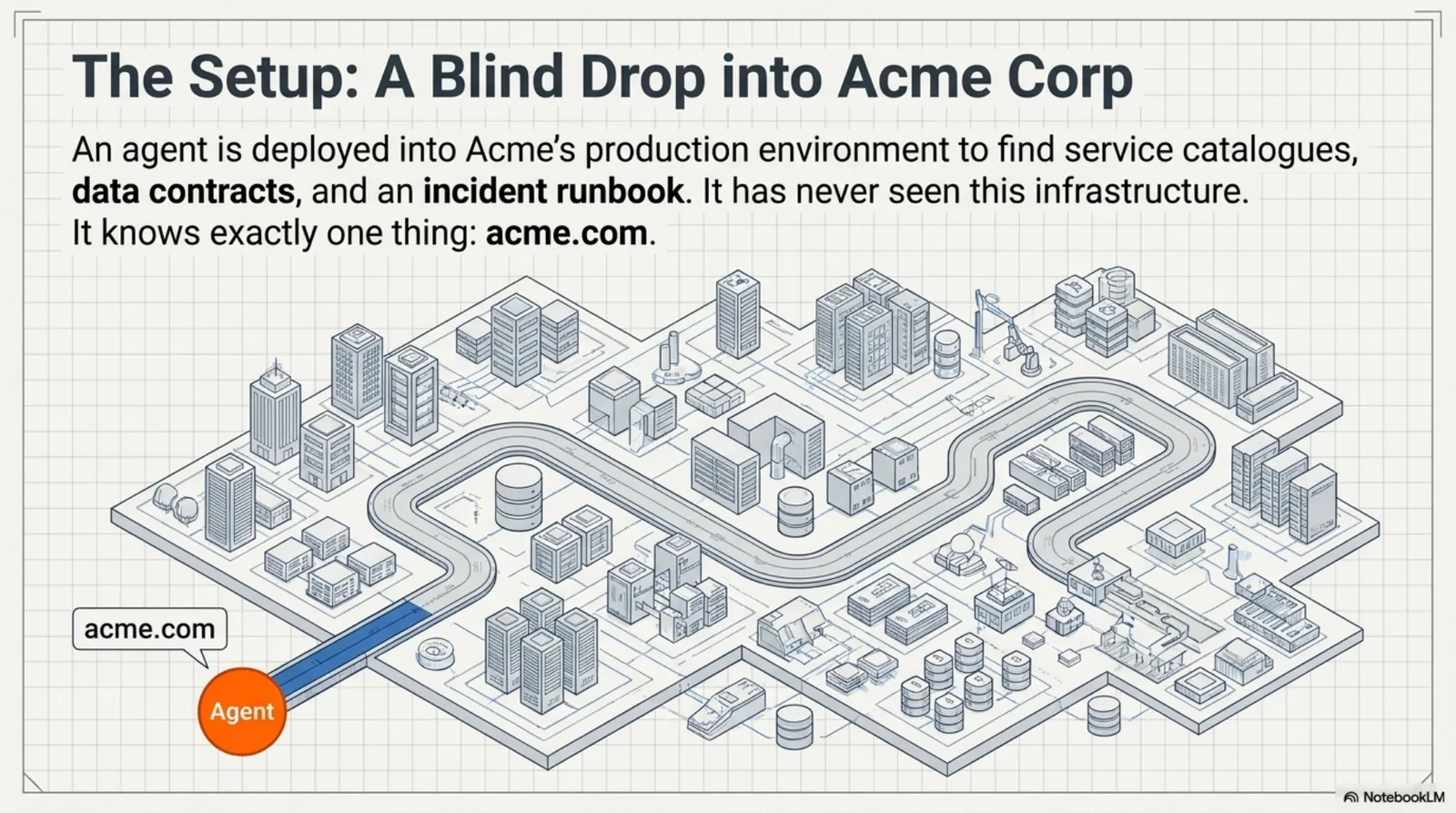
An agent is deployed into Acme Corp's production environment. Its task requires internal knowledge — service catalogues, data contracts, an incident runbook. It has never seen Acme's infrastructure before. It knows one thing: the domain, acme.com.
Six months ago, this was where the story ended. Today it's where it starts.
Step 1: The front door — discovery¶
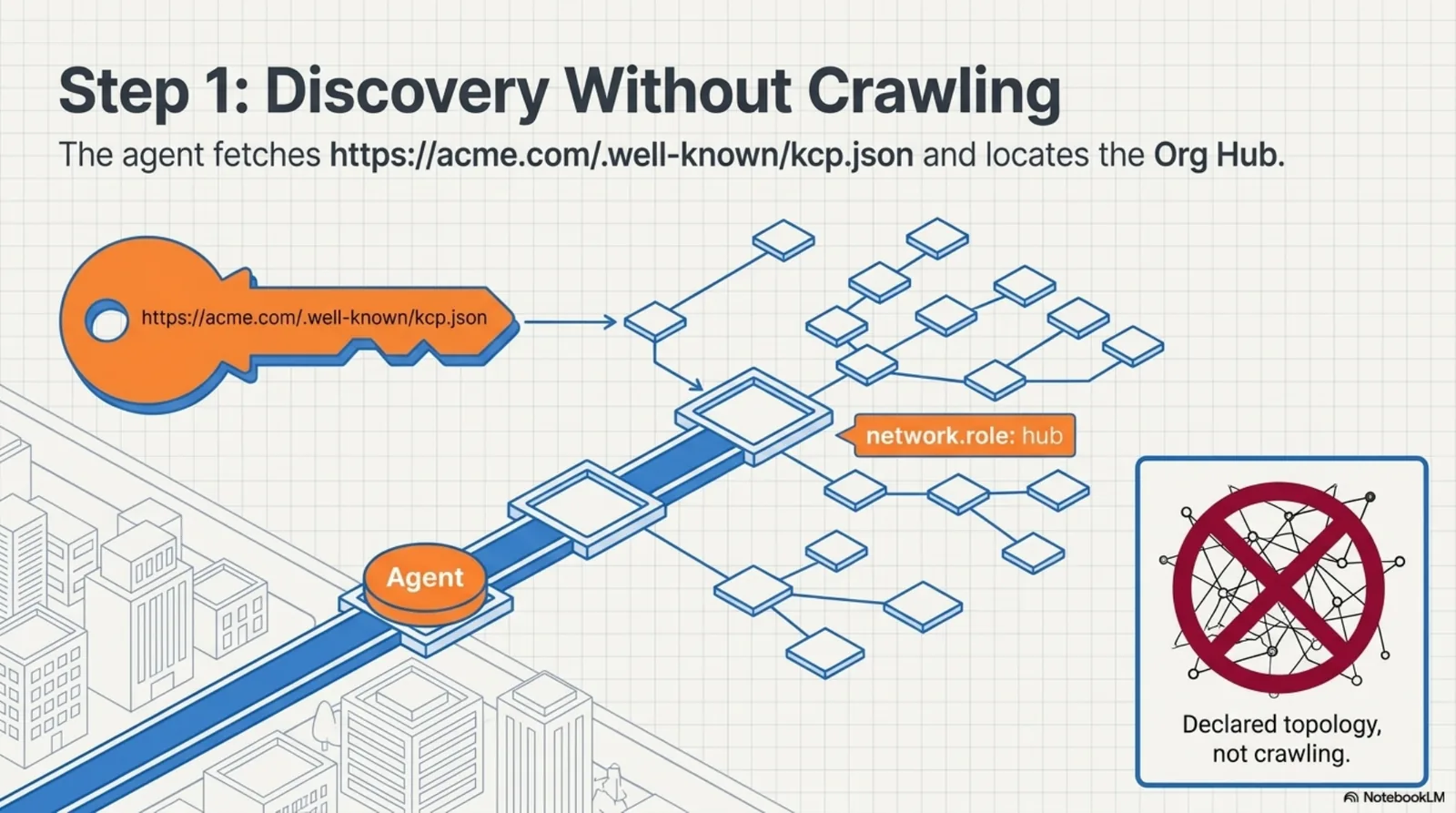
The agent fetches https://acme.com/.well-known/kcp.json (§1.4 — a discovery path present since v0.1, the very first draft) and finds the pointer to Acme's org hub — a public manifest declaring network.role: hub (the field from v0.11's agent-readiness work; the Org Hub pattern from RFC-0011, v0.24). The hub is the one manifest every agent may read: a front-door unit describing what Acme publishes, and a manifests[] federation block (§3.6, v0.9) listing everything else.
No crawling. No guessing. The knowledge topology is declared.
Step 2: Choosing the right world — context¶
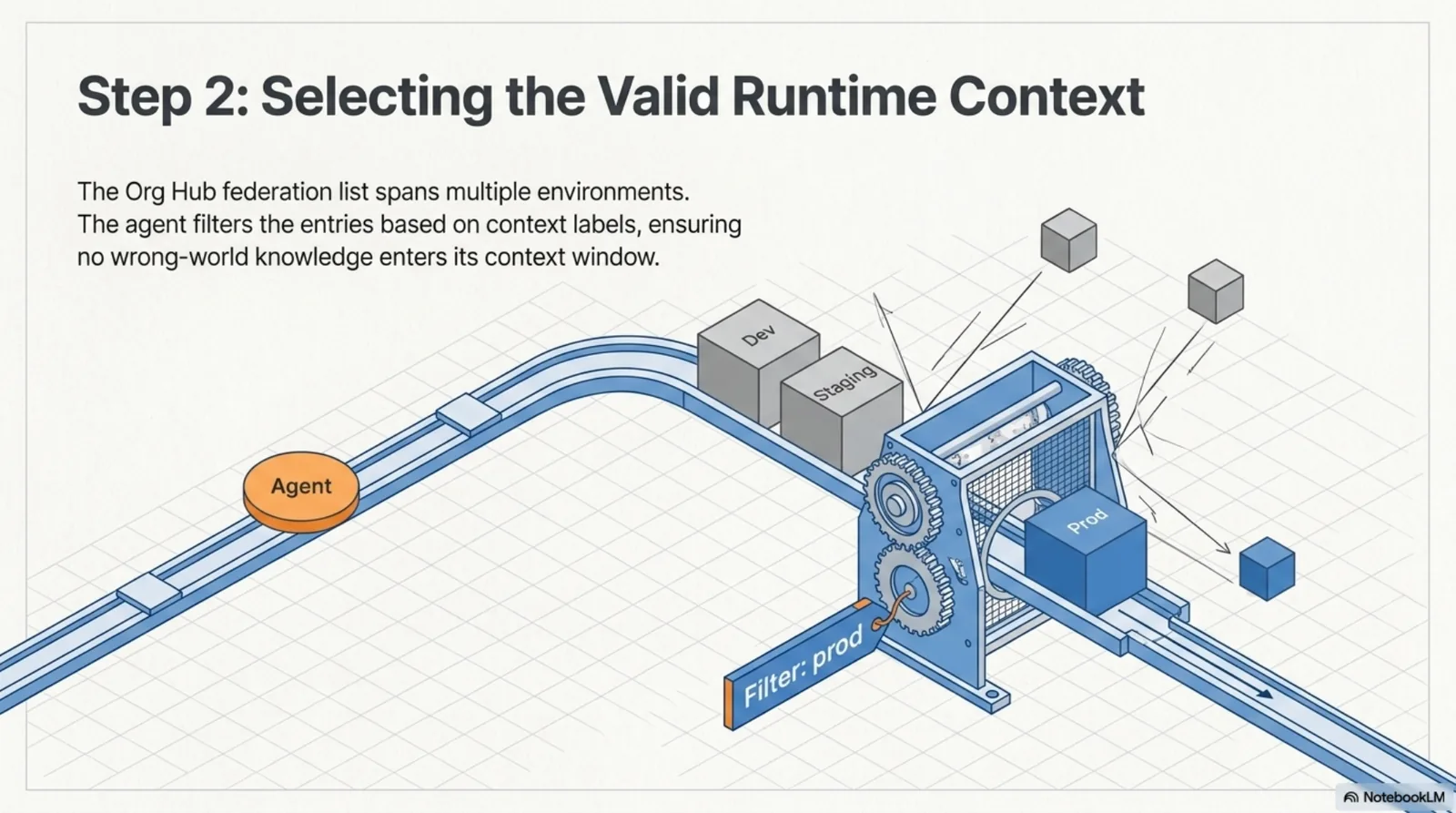
The hub's federation list spans environments. Each entry carries context labels (v0.24):
manifests:
  - id: service-catalogue-prod
    url: "https://knowledge.acme.com/prod/knowledge.yaml"
    context: [prod]
  - id: service-catalogue-dev
    url: "https://knowledge.dev.acme.com/knowledge.yaml"
    context: [dev, test]
Our agent runs in prod, so it selects only the entries valid for its runtime. One hub, every environment, no wrong-world knowledge loaded into context.
Step 3: Planning the credentials — agent_identity¶
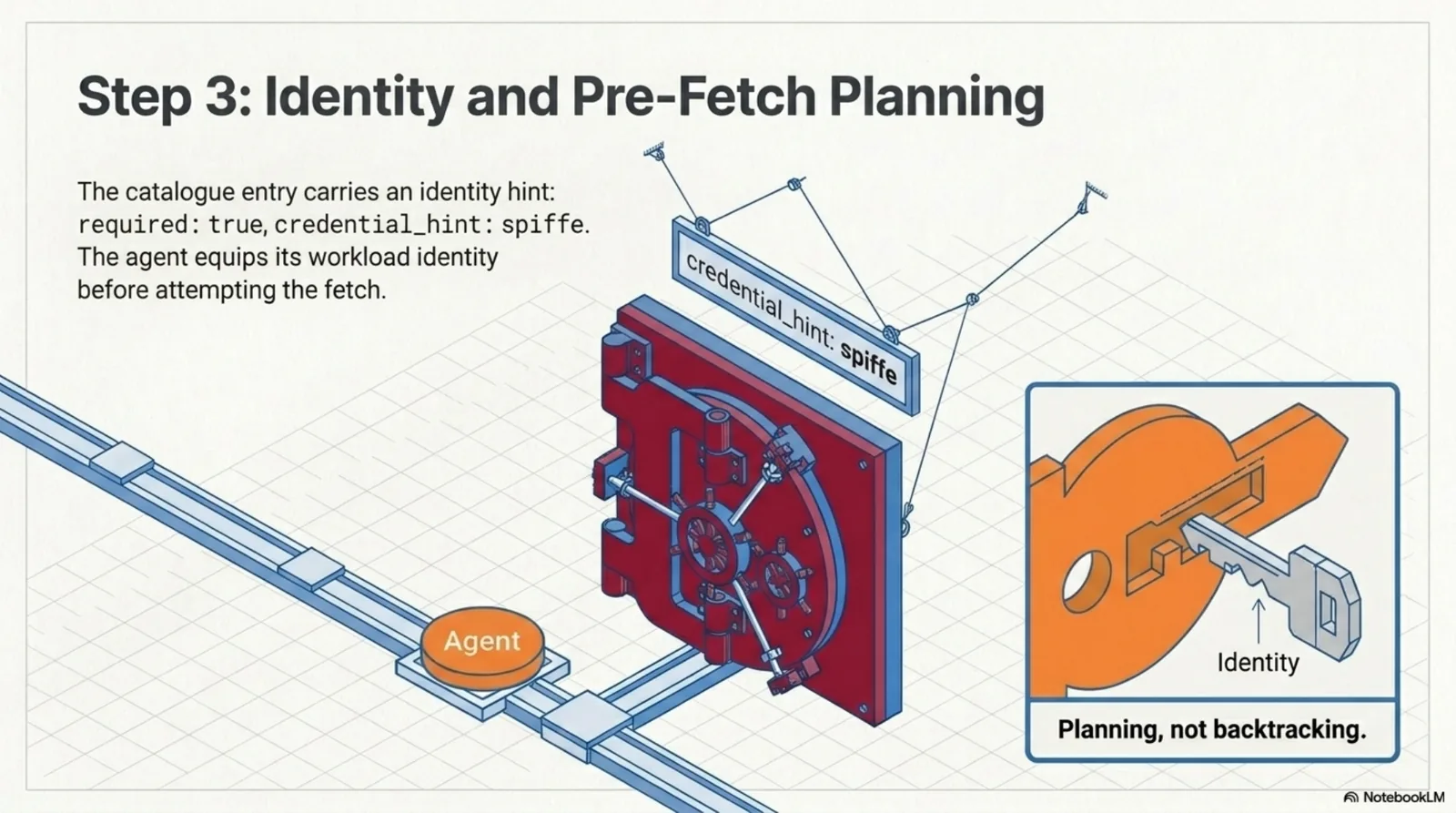
The prod catalogue entry also carries an agent_identity hint (v0.24): required: true, credential_hint: spiffe, and a docs_url. This is not authentication — it's a pre-fetch planning hint. The agent knows, before spending a single fetch, that it needs its SPIFFE workload identity for what's behind this reference. It plans instead of failing and backtracking.
Step 4: Verifying the publisher — producer trust¶
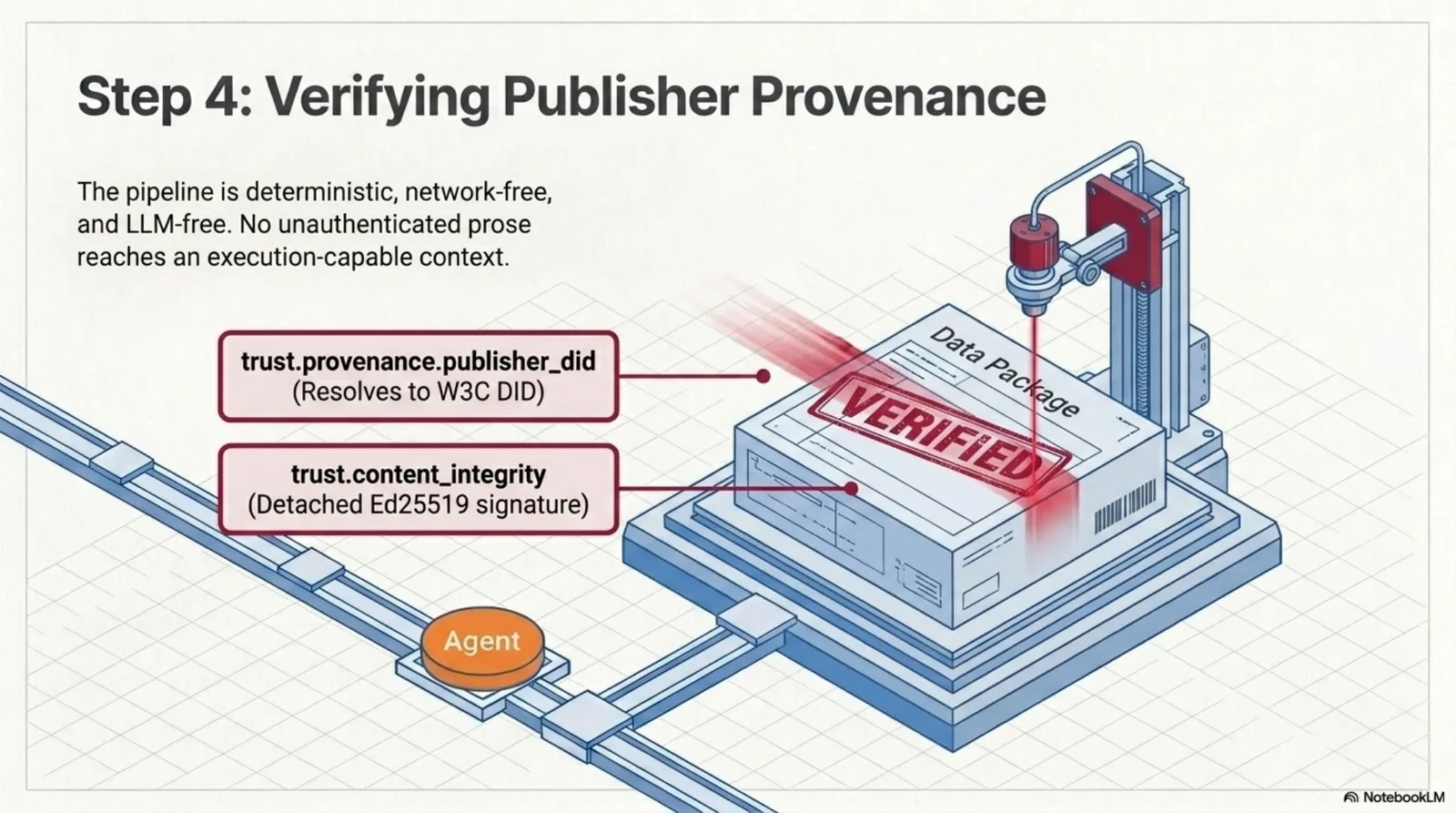
The agent fetches the prod manifest and checks the detached Ed25519 signature (v0.16) against trust.content_integrity. The trust.provenance.publisher_did (v0.23) resolves to a W3C DID — the publisher isn't just a name string, it's an entity that provably controls a key pair. If the agent ingests via kcp render, the pipeline is deterministic, network-free, and LLM-free (C1/C7, v0.18) — no unauthenticated prose reaches an execution-capable context.
Step 5: Asking a real question — the query vocabulary¶
The agent searches with the standard vocabulary (§15, v0.14): terms, audience: agent, its token budget. Units respond with intent, triggers, hints, content_structure — the metadata layers that let an agent evaluate whether to load before loading (v0.3–v0.14). Units marked not_for its task type are demoted or excluded (v0.17).
Step 6: Only what's still true — time¶
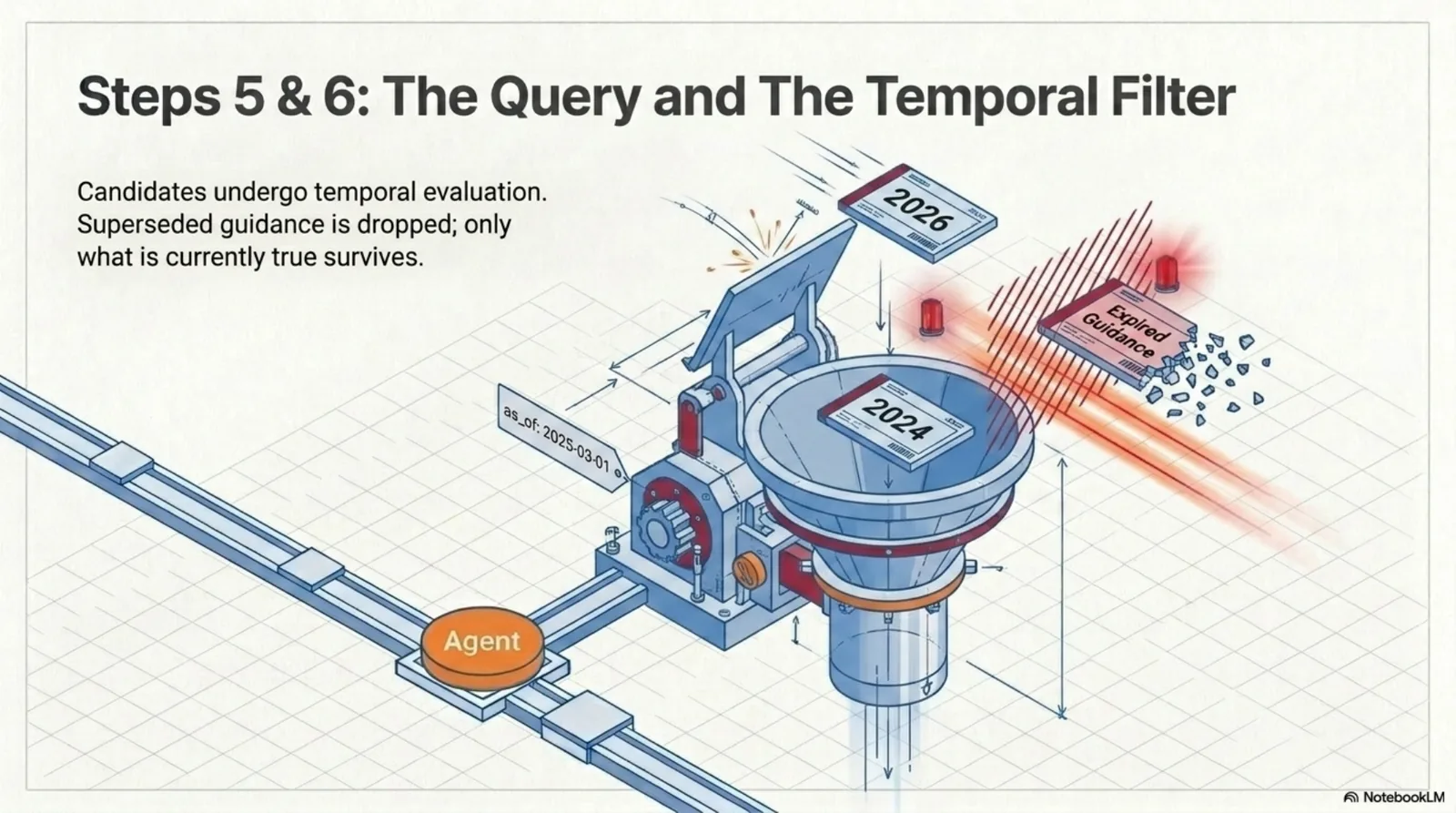
Every candidate passes temporal evaluation (v0.19–v0.20). Superseded guidance is dropped, not co-served — including at the federation level, where an entire sub-manifest with an expired validity window disappears from results (C18, v0.21). Had this been an audit instead of an operation, one as_of: "2025-03-01" parameter would replay the knowledge base as it stood on that date.
Step 7: Proving itself — consumer trust¶
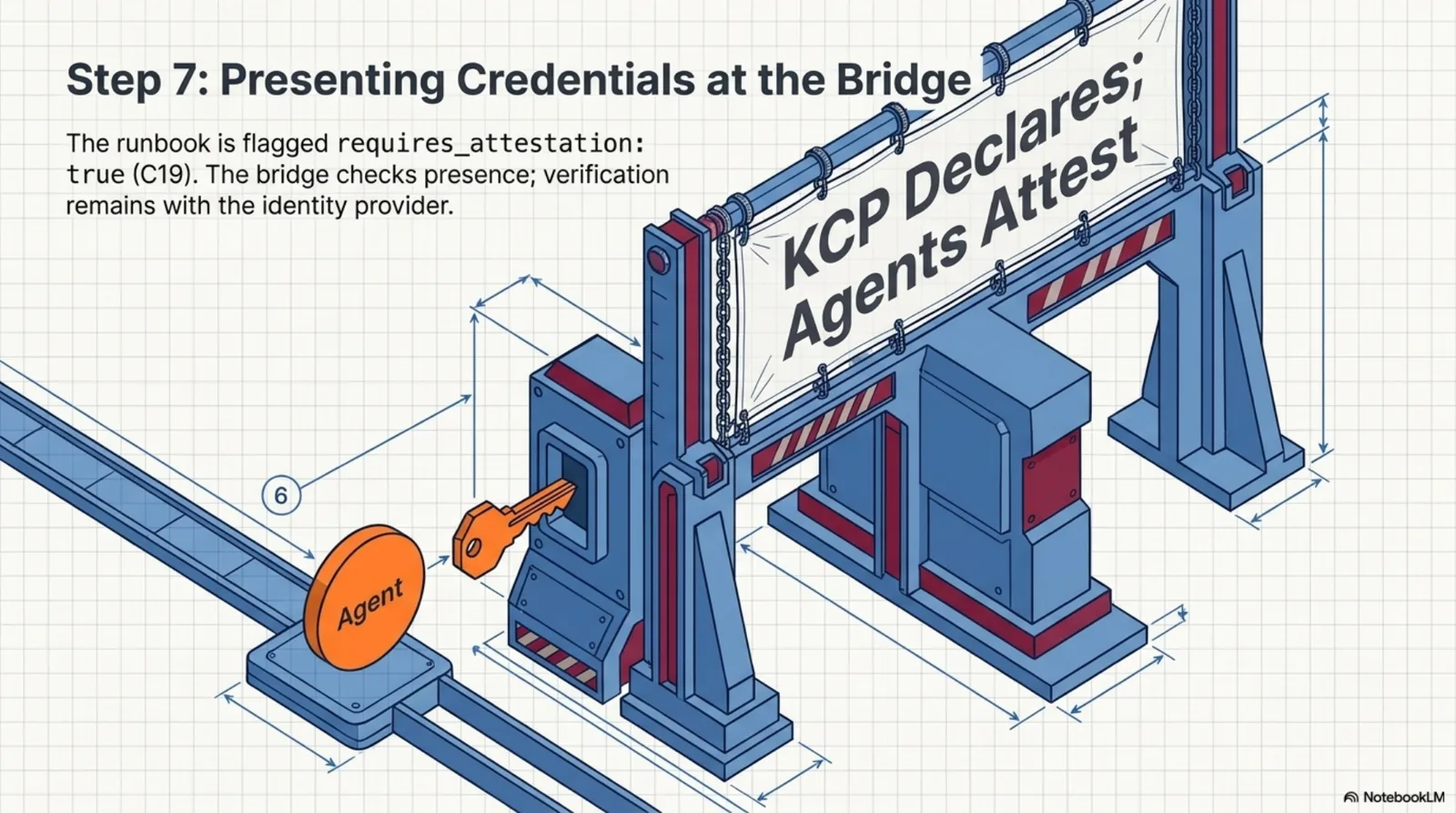
The incident runbook comes back flagged requires_attestation: true (C19, v0.22). The bridge refuses to serve it until a credential is presented (C20) — on every retrieval path, no side doors. The agent presents the SPIFFE credential it planned for back in step 3. The bridge checks presence, not validity — verification stays between the agent and the identity provider. KCP declares; agents attest.
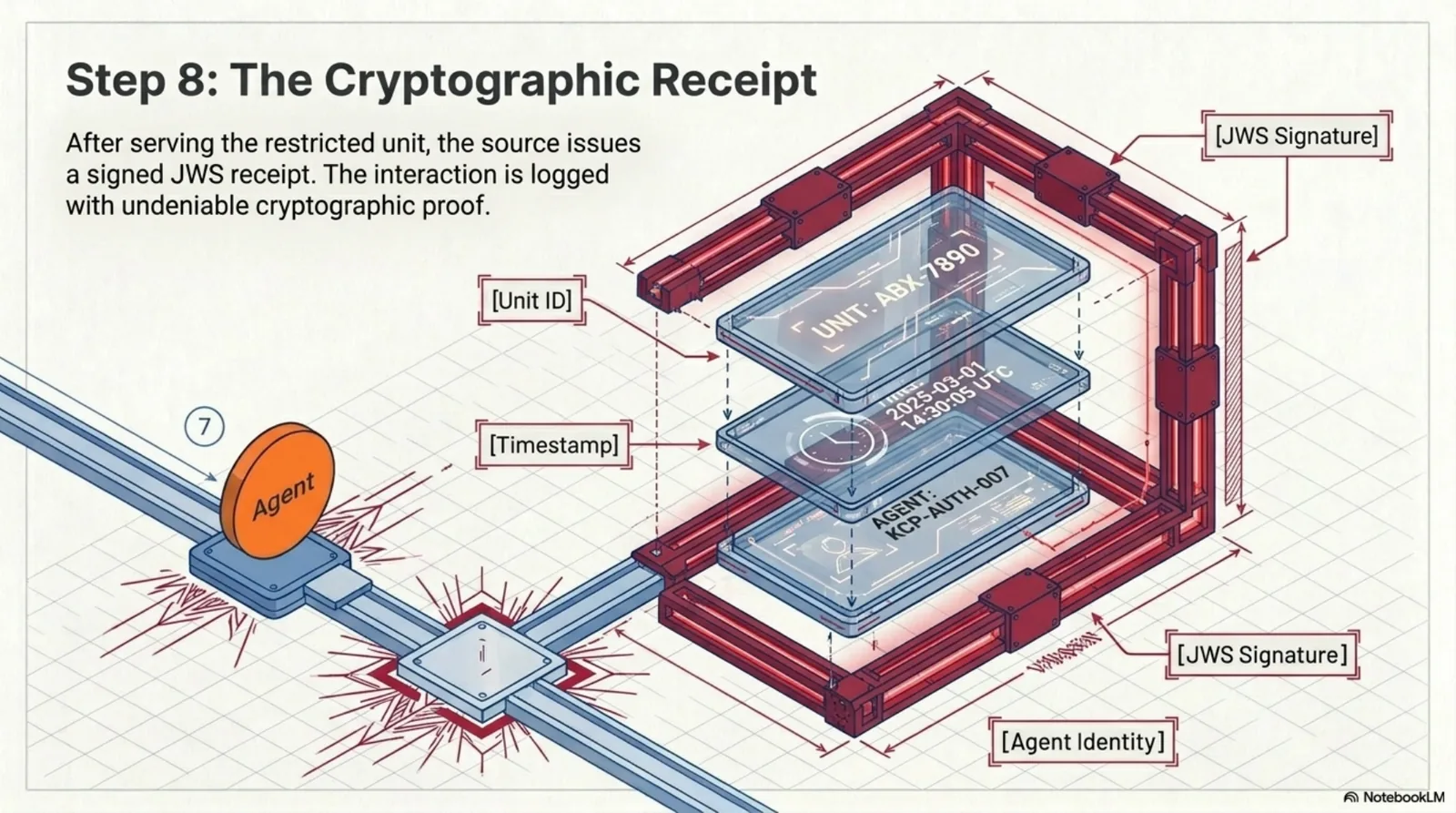
Step 8: The receipt — proof it happened¶
The source declares trust.audit.provides_access_receipts: jws (v0.23), and after serving the restricted unit it issues a signed receipt: unit id, timestamp, agent identity. The agent attaches it to its task record. Whatever this work feeds into — a compliance report, an incident post-mortem — carries cryptographic proof of exactly which knowledge was consulted, when, and by whom.
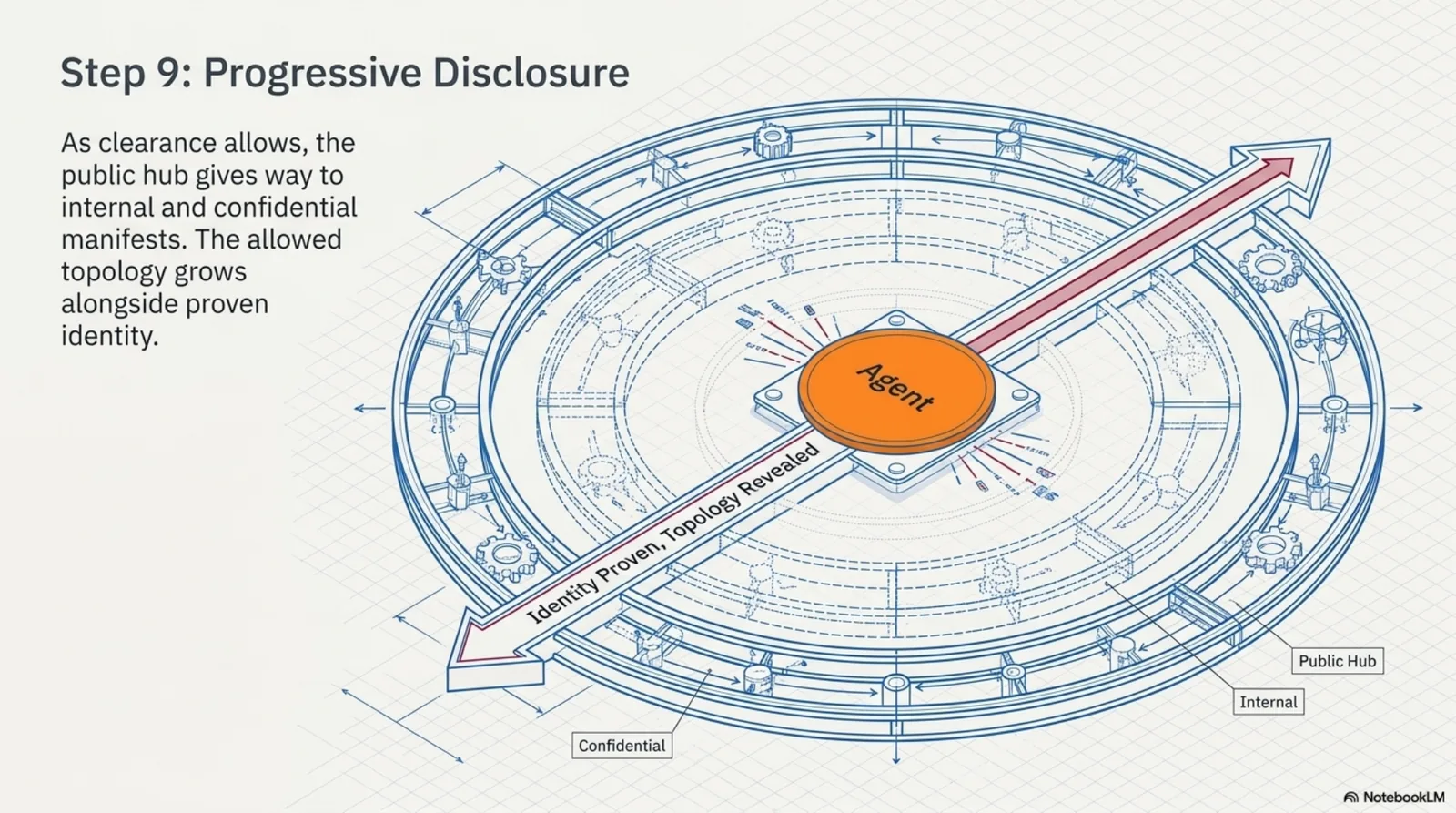
Step 9: Going deeper — progressive disclosure¶
As the agent's clearance allows, the hub's public tier gives way to internal and confidential manifests (sensitivity tiers, v0.5; the disclosure pattern, v0.24). The topology it's allowed to see grows with the identity it can prove. Nothing about this required a bespoke integration: every step was driven by declared metadata in standard fields.
That's the whole traversal. Domain in, receipt out.
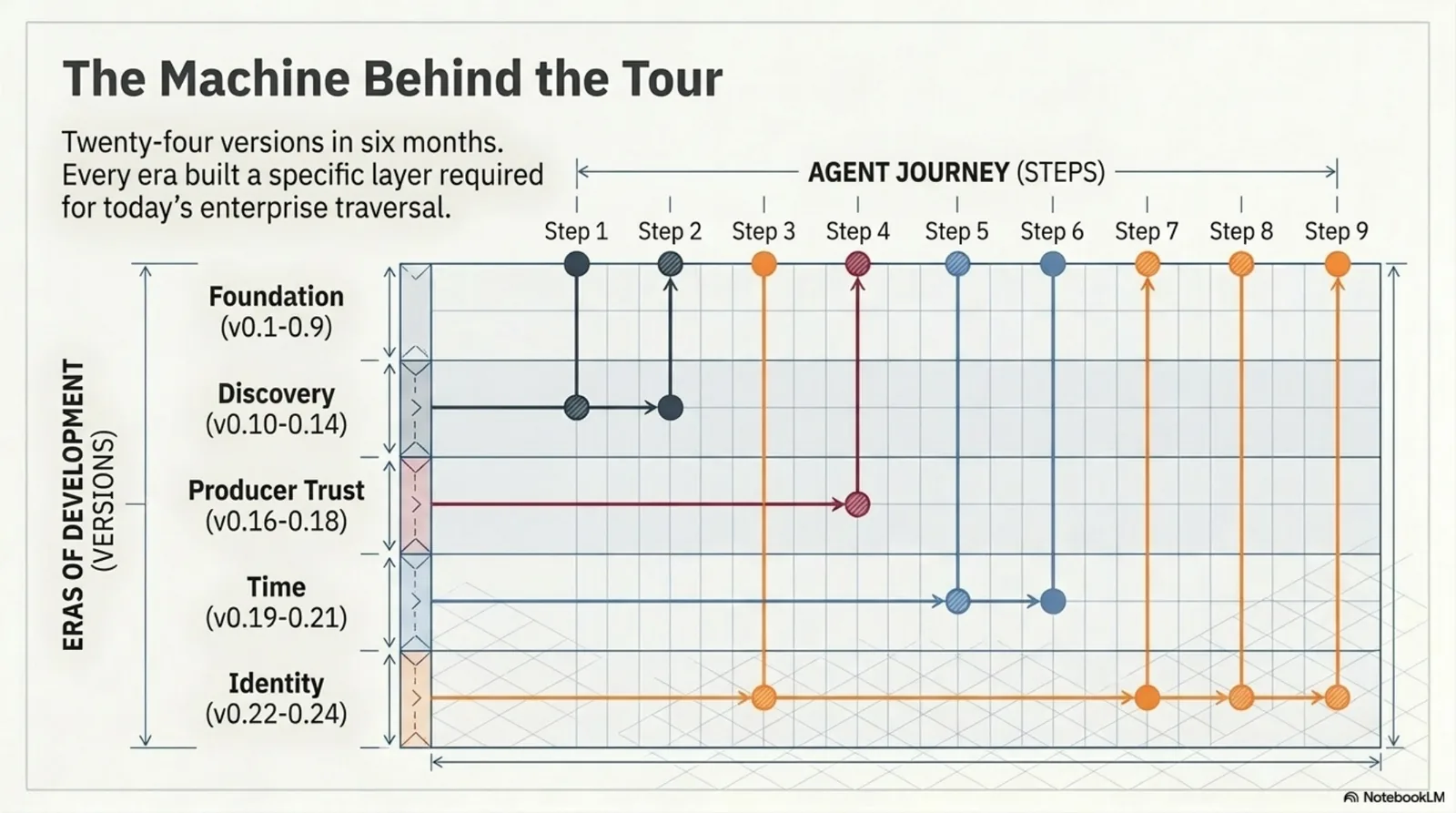
The machine behind the tour¶
Six months of releases, five eras:
| Era | Versions | What it built |
|---|---|---|
| Foundation | v0.1–v0.9 (Jan–Mar) | Units, intent, triggers, relationships, auth/delegation/compliance declarations, federation DAG |
| Discovery & governance | v0.10–v0.14 (Mar) | .well-known, catalogs, agent readiness, governance, the query vocabulary |
| Producer trust | v0.16–v0.18 (Jun) | Signed manifests, content hashes, the trusted render pipeline |
| Time | v0.19–v0.21 (Jun) | Bi-temporal validity, as_of, composition, federation temporal |
| Identity | v0.22–v0.24 (Jul) | Attestation gating, extended auth methods, receipts, publisher DIDs, org-federation |
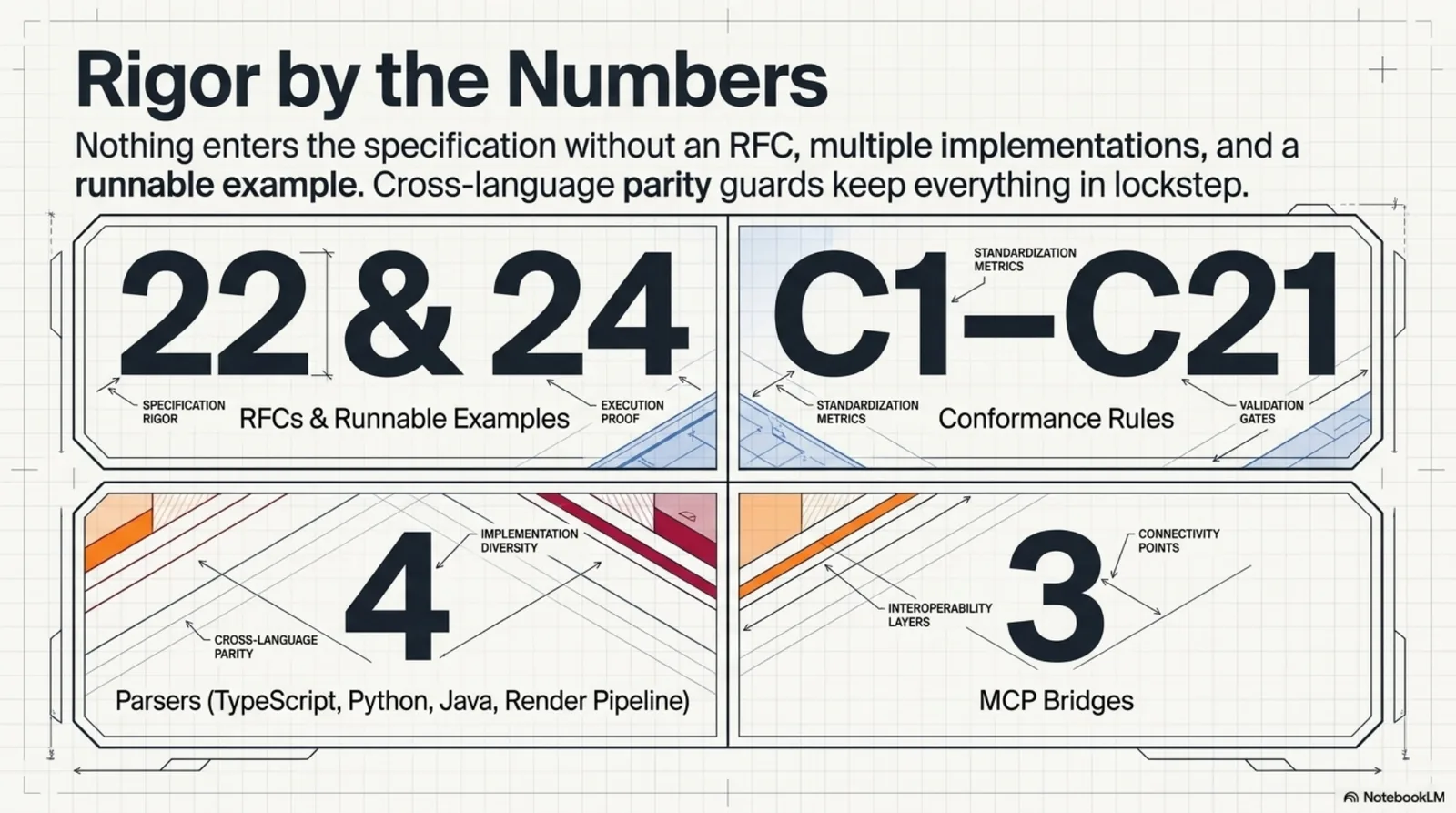
And the numbers, as of today: 22 RFCs (with a promotion pipeline — nothing enters the spec without an RFC, implementations, and a runnable example), conformance rules C1–C21, four parsers (TypeScript, Python, Java, and the render pipeline) kept in lockstep by cross-language parity guards, three MCP bridges whose versions snap to the spec version, 24 runnable examples, and 6 guides.
The invariant that made it possible¶
Every era added surface. One rule kept the surface from becoming attack surface: a manifest is data, never instructions. The renderer never fetches. The bridge never verifies credentials. Nothing ever dereferences an attestation_url or an issuer_hint on the protocol's behalf. v0.24 held the line too — agent_identity is a planning hint the agent may act on, never a call the protocol performs.
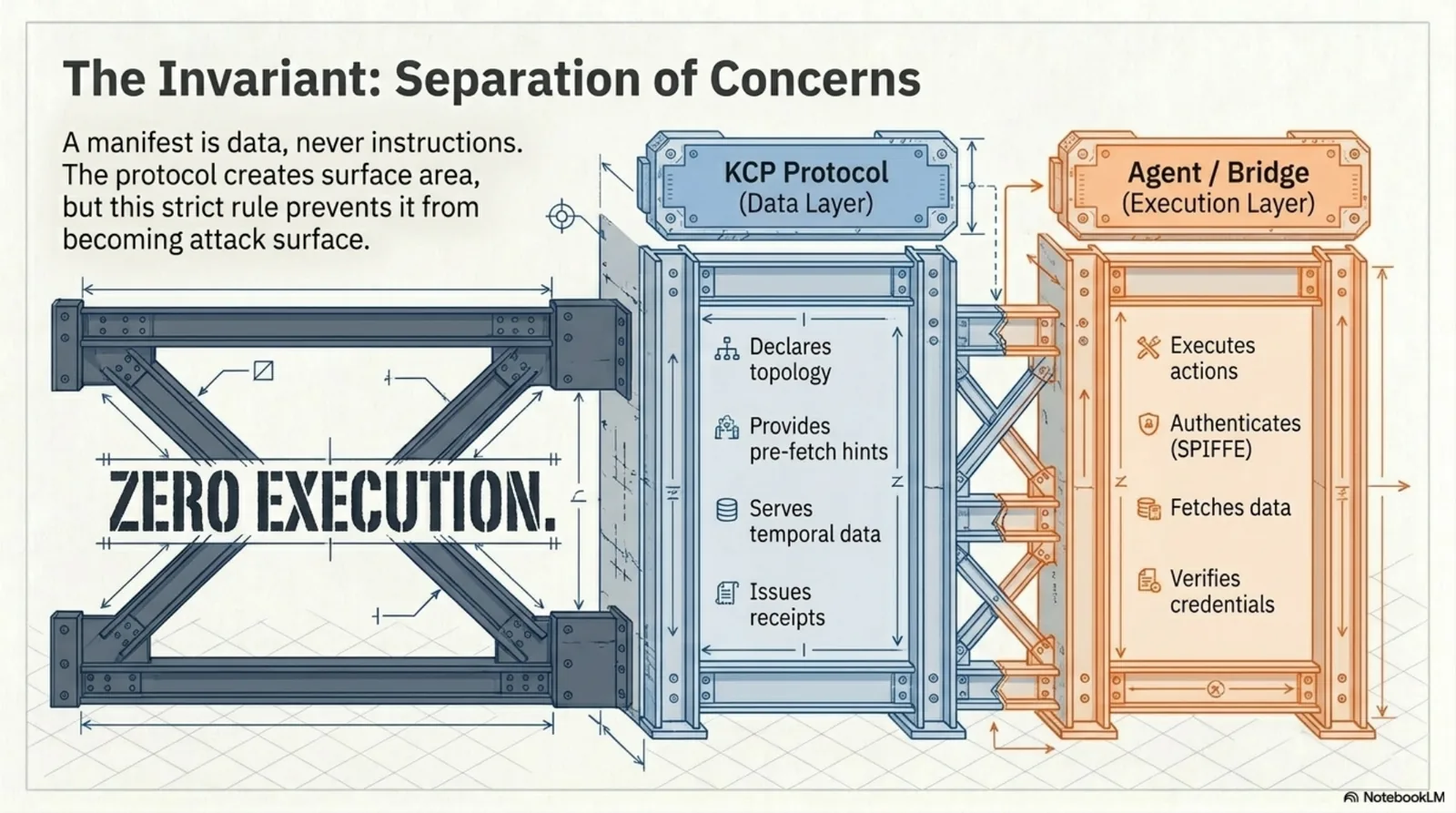
Twenty-four versions, and the answer to "what does KCP execute?" is still: nothing. That's not a limitation. It's the reason the rest could be built.
What's still open¶
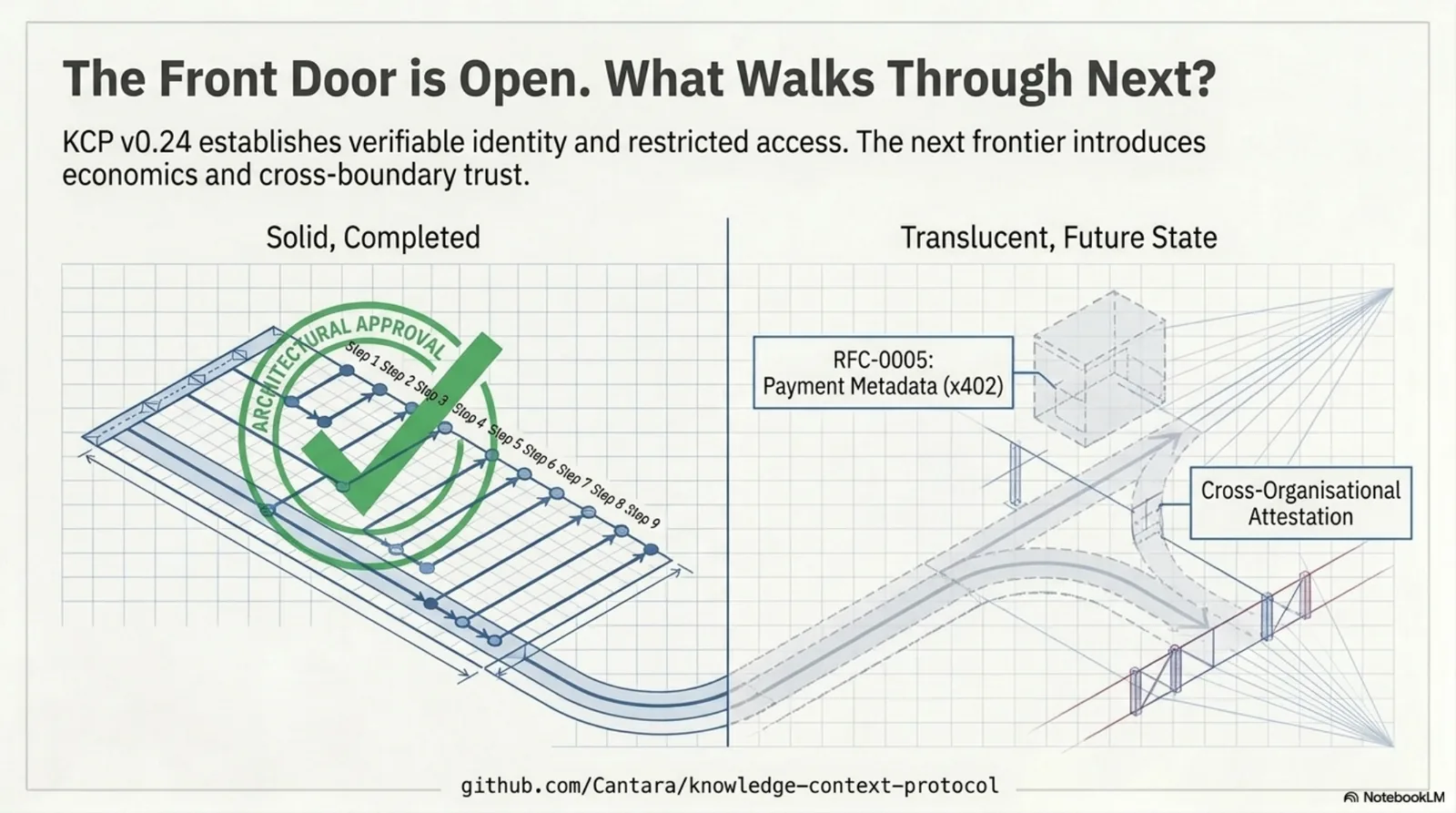
The traversal above ends with a receipt. A knowledge economy ends with a payment — and RFC-0005 (payment metadata, x402) is still sitting at the RFC stage, waiting for the moment declared terms and provable identity meet an actual price. Cross-organisational attestation — federating between parties who trust different identity providers — has open questions beyond what RFC-0011 resolved today.
The front door is built. What walks through it next is the interesting part.
→ github.com/Cantara/knowledge-context-protocol
Series: Knowledge Context Protocol
← The Agentic Web Has No Login Page · Part 35 of 52 · Selling News to Robots →