Skip to content

Writing

KCP v0.1 to v0.5: How a Knowledge Standard Grows

KCP (Knowledge Context Protocol) has gone from a draft proposal to a v0.5 spec in one week. This post walks through what each version added, why those decisions were made, and where the spec is heading next.

The short version: every release promotes optional fields from community RFCs into the normative core. The spec is a strict superset at each step — a manifest written for v0.1 is still valid under v0.5.
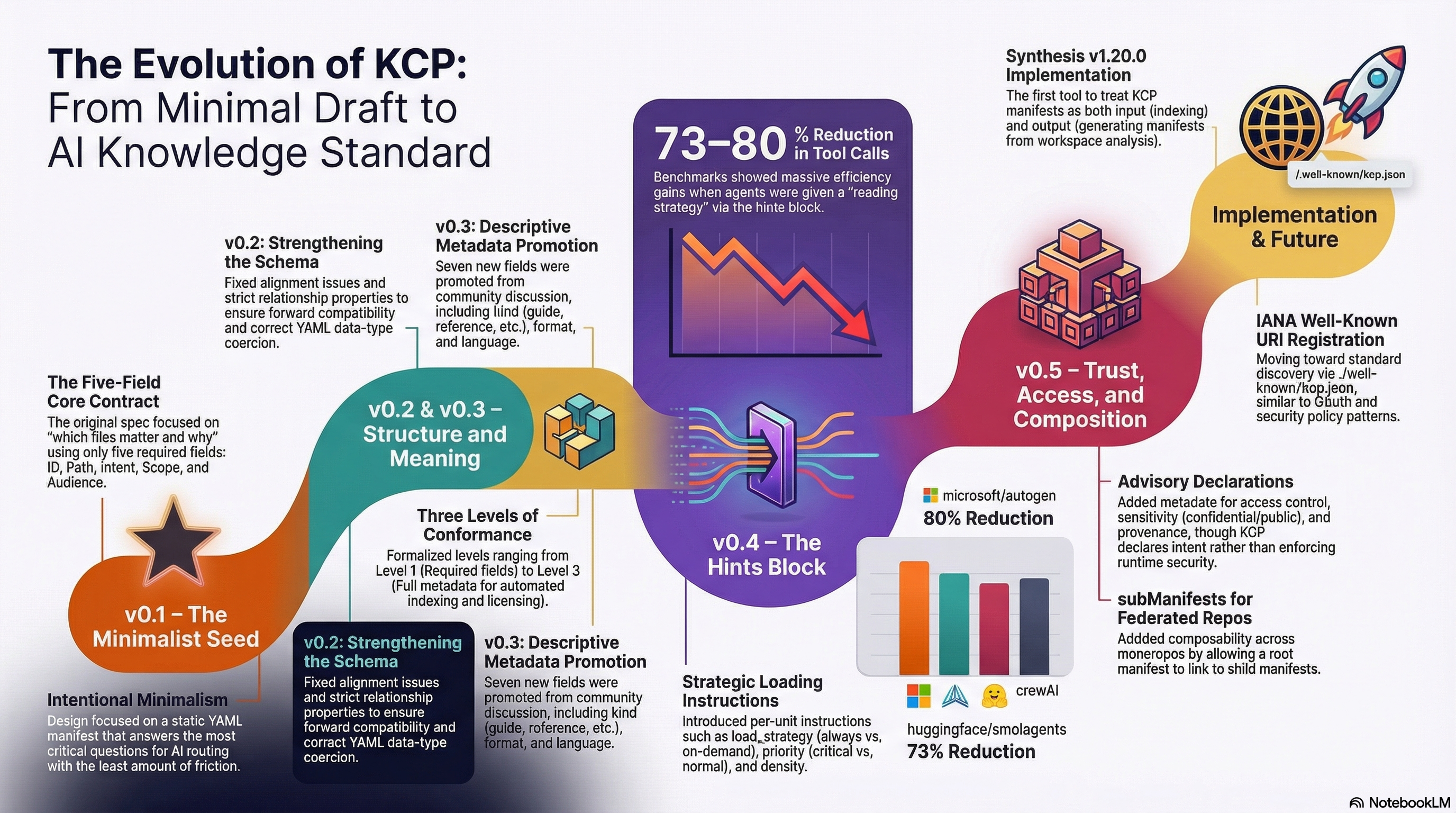
The Evolution of KCP: From Minimal Draft to AI Knowledge Standard — v0.1 through v0.5 and Synthesis v1.20.0 implementation overview

KCP on Three Agent Frameworks: Same Pattern, Bigger Numbers

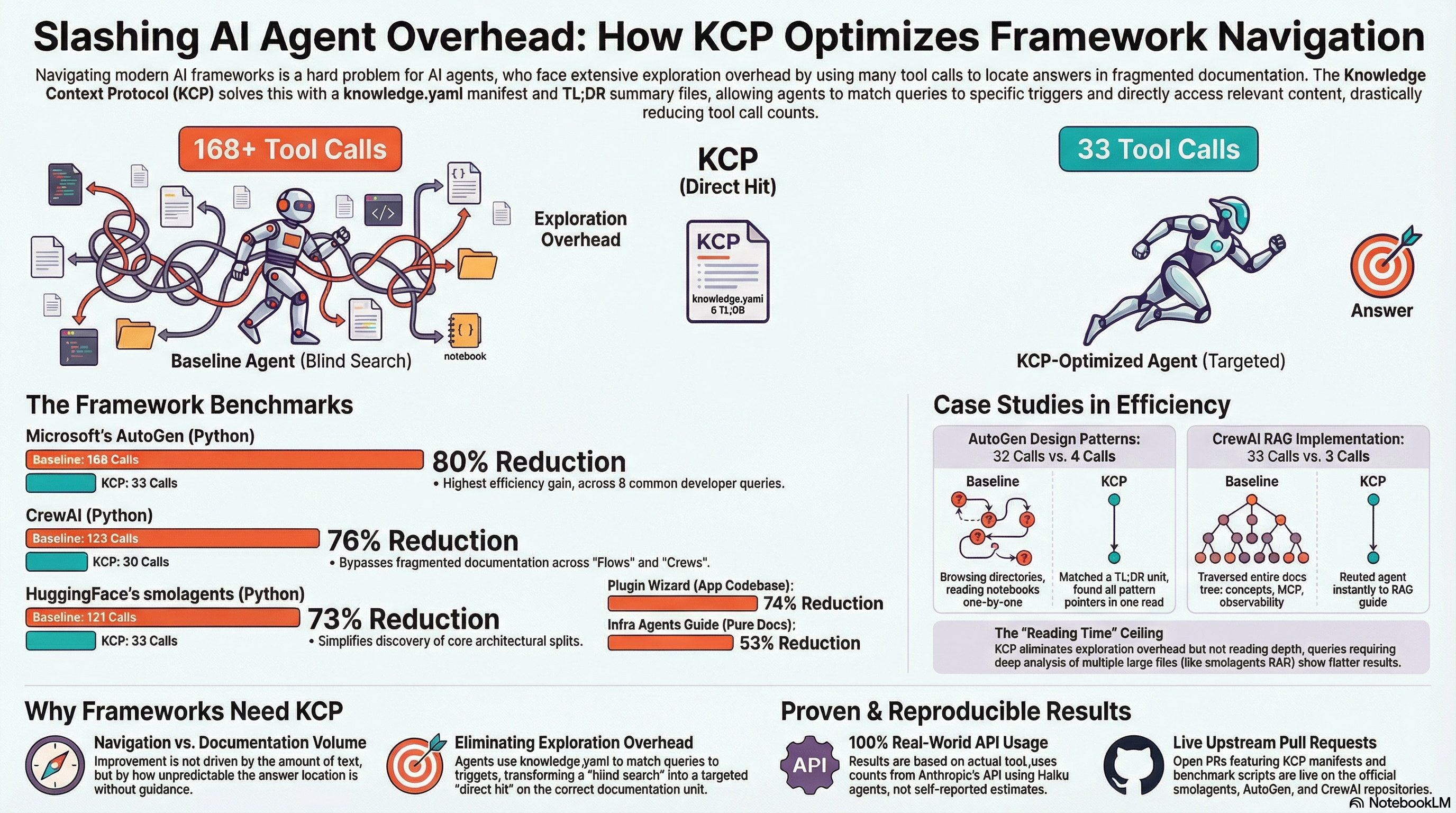
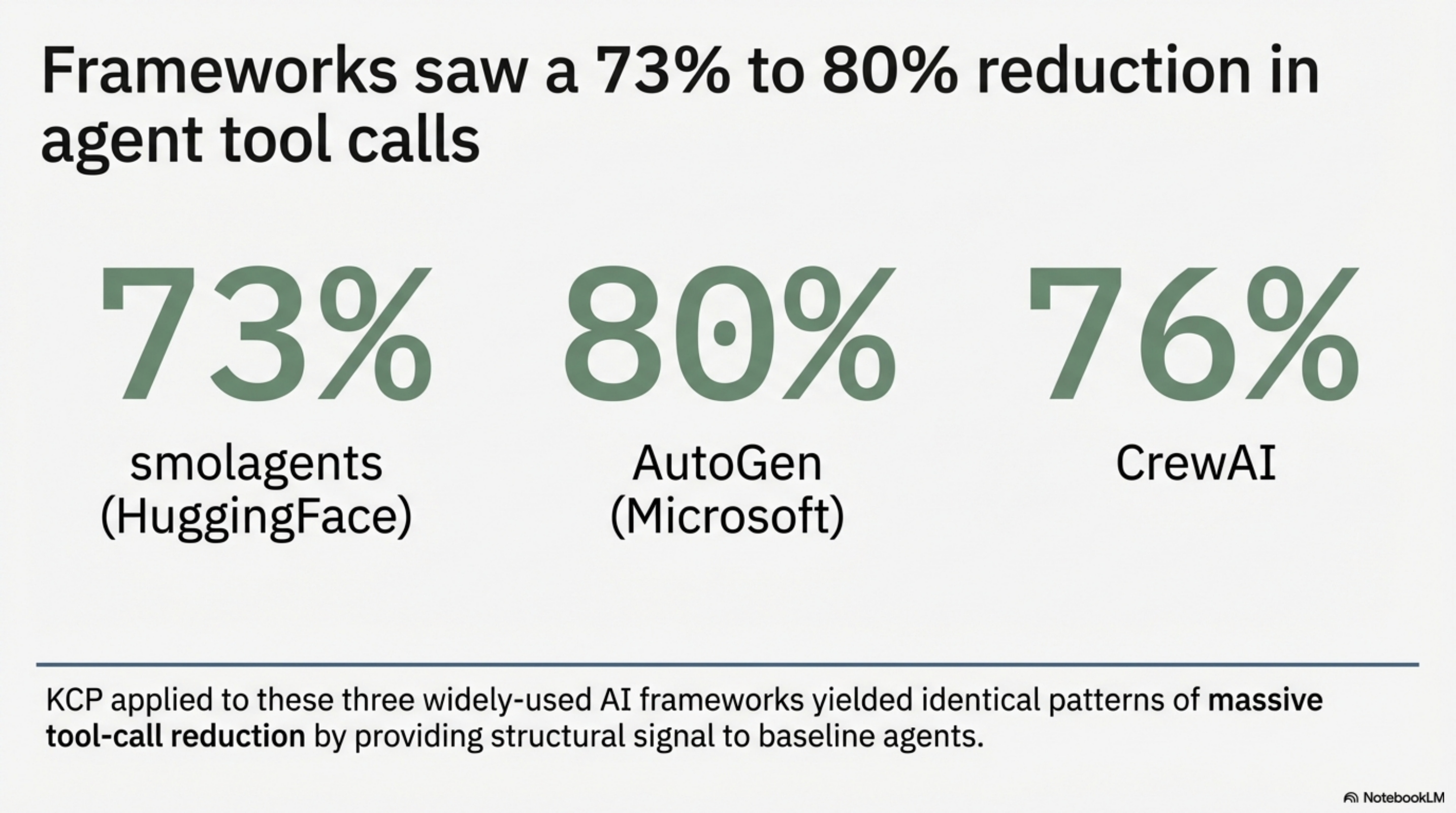
Five repos benchmarked, 73–80% reduction across three major AI agent frameworks. AutoGen leads at 80%, CrewAI at 76%, smolagents at 73%.

Today we applied KCP to three of the most widely-used AI agent frameworks — smolagents (HuggingFace, 25K stars), AutoGen (Microsoft, 55K stars), and CrewAI (44K stars). All three got the same treatment: a knowledge.yaml manifest, pre-built TL;DR summary files for the highest-traffic sections, and a before/after benchmark using the same model and methodology.

The results: 73%, 80%, and 76% reductions in agent tool calls. Open PRs are live on all three repositories.

73% smolagents (HuggingFace), 80% AutoGen (Microsoft), 76% CrewAI — KCP applied to these three widely-used AI frameworks yielded identical patterns of massive tool-call reduction.

KCP on Two Repos, Two Days: What the Numbers Actually Show

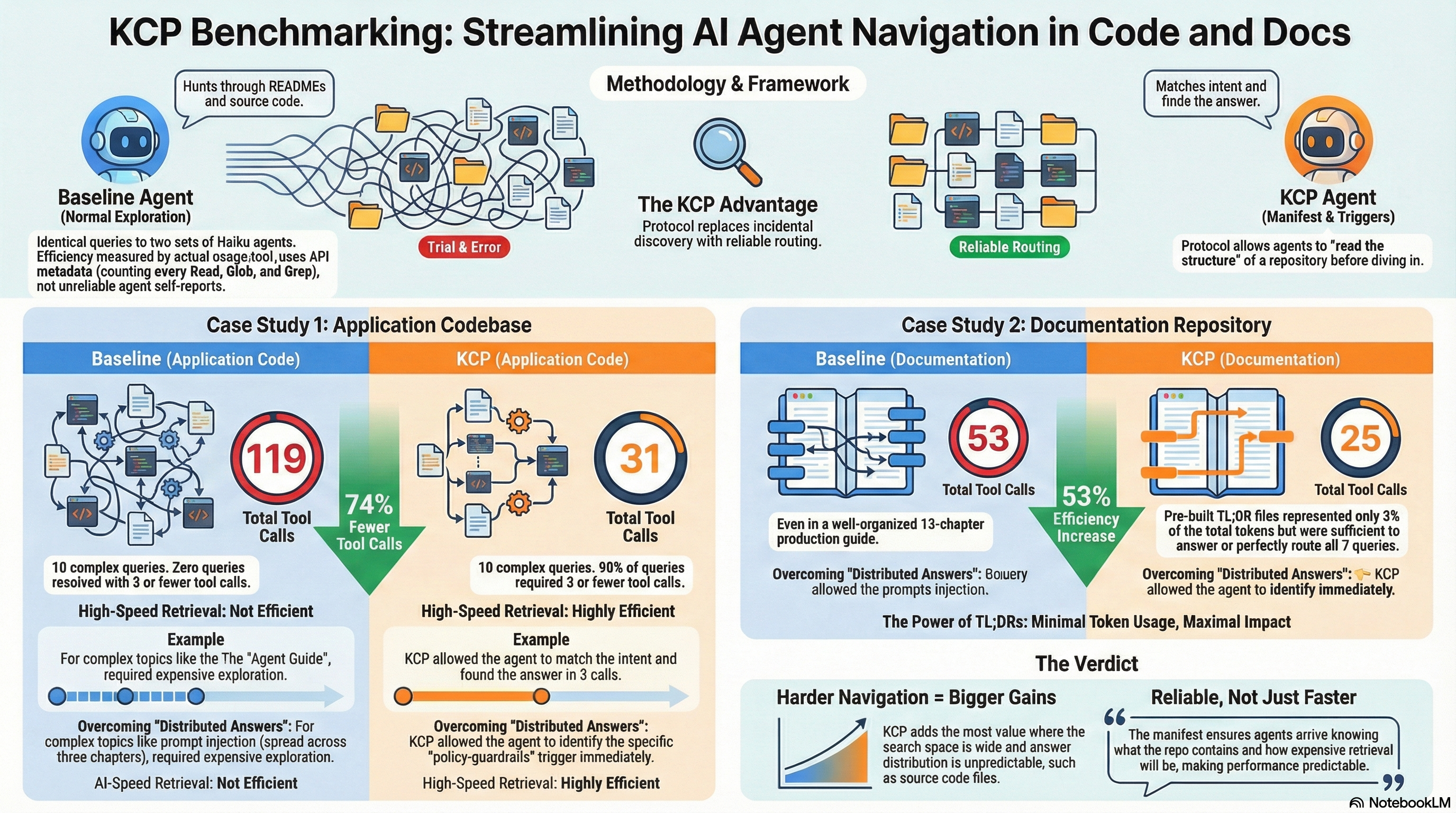
KCP benchmarking: 119 → 31 tool calls on application code, 53 → 25 on documentation. Two case studies, same methodology.

This week we applied KCP to two repositories back to back. Both got a knowledge.yaml manifest, pre-built TL;DR files for the highest-traffic sections, and a before/after benchmark using the same model and methodology.

The repos are very different. One is an application codebase — a plugin wizard for an AI-native design platform, 15 documentation units covering architecture, agent types, tools, shape schemas, and plugin protocols. The other is a pure documentation repository — a 13-chapter production guide for building safe infrastructure agents, 226 KB of structured decision frameworks and deployment checklists.

The question was whether KCP adds meaningful value in both cases, and whether the nature of the content changes the answer.

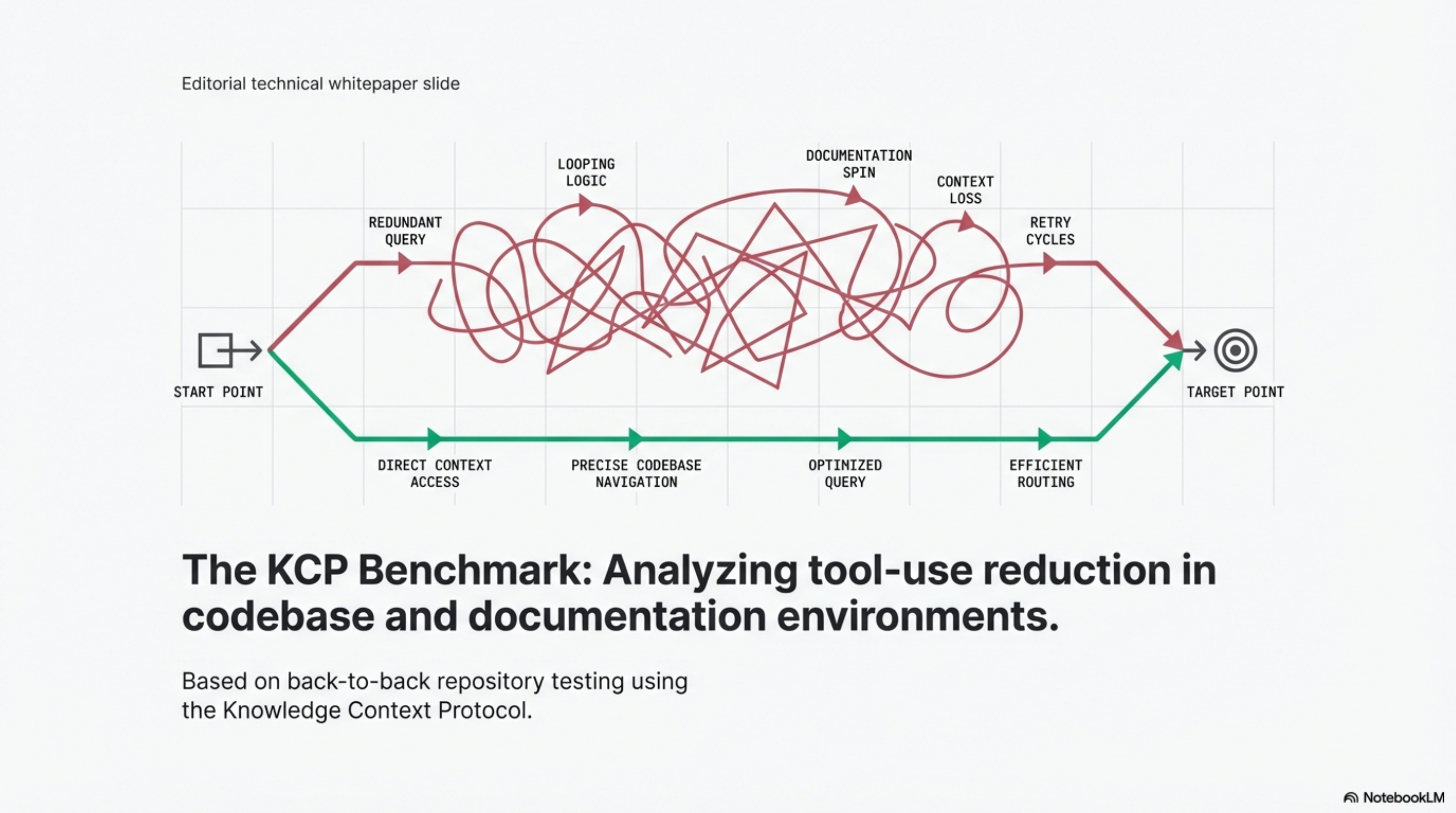
Without a manifest, agents wander. With one, they go straight to the answer.