Skip to content

March 2026

The agents were forgetting everything they discovered

Something felt off.

I'd been using the Task tool heavily — delegating research tasks to Claude subagents, letting them explore codebases, map dependencies, surface patterns. The results coming back were good. But when I'd start a new session and ask about the same topic, there was no trace of that prior investigation. The context window had reset, and the episodic memory layer — kcp-memory — wasn't helping.

Here's what that looked like in practice: I'd asked a subagent to map the co-events repository ecosystem earlier this week. It came back with a clear picture — co-events is the CatalystOne HRIS event-sourcing platform, seven repos, with a dependency chain running from co-event-typelib through co-event-sdk into co-analytics-vanilla (which, by the way, uses Neo4j with APOC, not SQL — a non-obvious choice). Two days later, I started a new session, asked about co-events architecture, and got a blank stare. The agent had no idea any of this had been mapped. It treated the question as entirely novel.

My first hypothesis was handover loss. Maybe something was being compressed or summarized too aggressively when agents returned their findings. Maybe the model transition (often Opus for the delegated tasks, Sonnet for the orchestrating session) was dropping context. That felt plausible, and a little unsettling.

The real cause was more concrete — and more fixable.
The Autonomous Agentic Web Needs a Foundation Layer

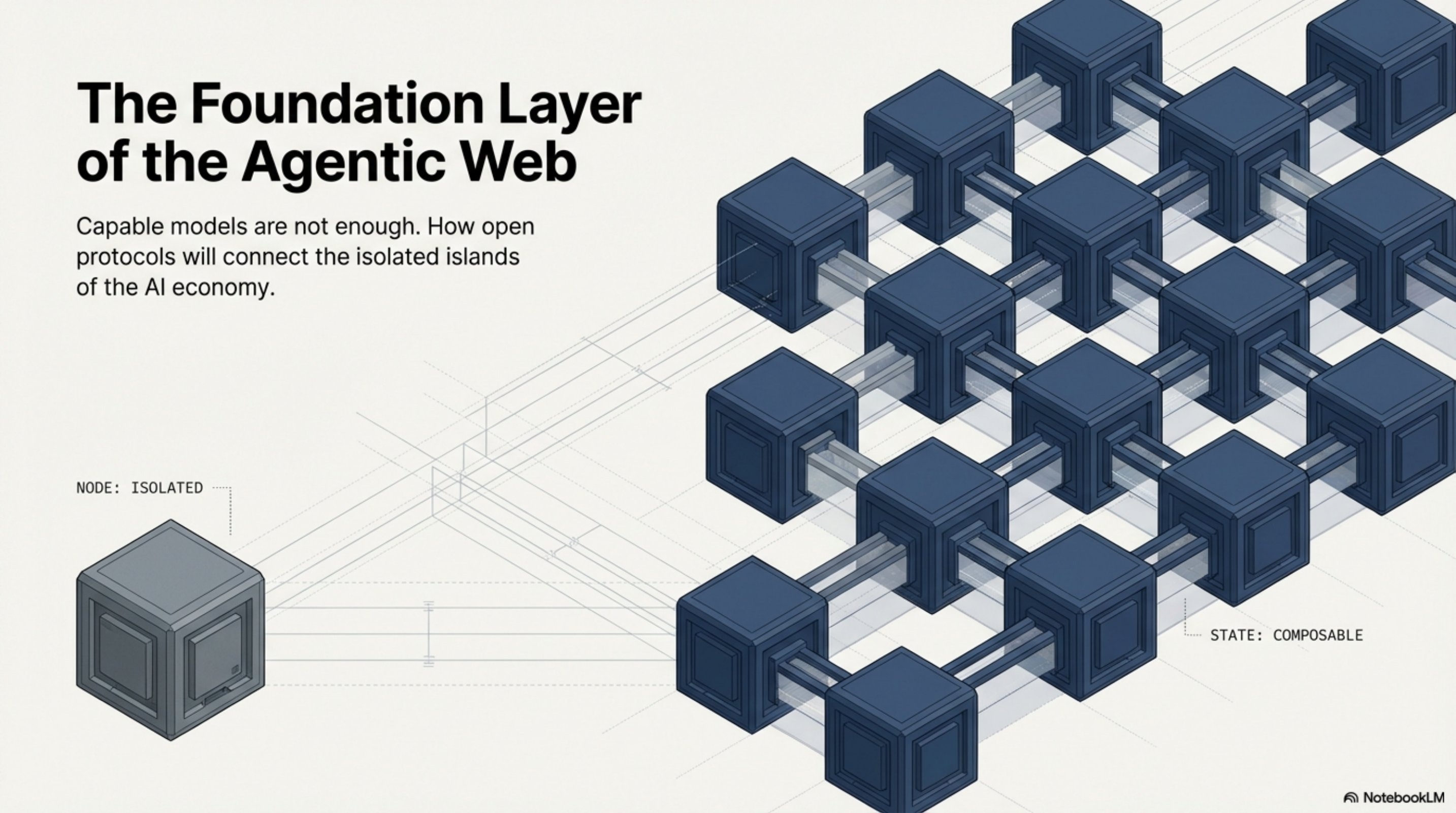
The Foundation Layer of the Agentic Web — Capable models are not enough

Something is being assembled right now, mostly without a name for it.

Production pipelines where agents write code, run tests, and open pull requests. Compliance workflows where agents check controls, gather evidence, and escalate to humans when something needs a decision. Developer rigs where an agent calls a tool, the tool delegates to a sub-agent, the sub-agent calls an API, and the result flows back up the chain.

The models are capable. The tooling is solid. The use cases are real.

What we are building — collectively, across hundreds of teams and projects — is an autonomous agentic web. And like the original web, it will only become useful when the pieces can talk to each other reliably. We are not there yet. The reason is interesting.

I haven't typed apt install in three months

Last Tuesday I needed a file-watch service on my workstation. The kind of thing that monitors a directory and triggers a reindex when something changes. Normally that means ten minutes of reading systemd docs I've read fifty times before, copying a unit file from somewhere, adjusting paths, running systemctl --user enable, checking journalctl for the inevitable typo in ExecStart.

Instead I described what I wanted. Claude Code found an existing service on the machine, used it as a template, wrote the unit file, enabled it, started it, checked the logs, confirmed it was running, and updated the knowledge manifest so future sessions know the service exists. I approved three actions. The whole thing took about ninety seconds.

I haven't typed apt install in three months. Not because I stopped installing software — I install more than ever. But the person typing the commands isn't me anymore.

The Code Was Never the Moat

Bruce Perens says the entire economics of software development are dead. He said this in response to a story about a developer using Claude to rewrite a Python library from LGPL to MIT in a few hours. 130 million monthly downloads. 1.3% textual similarity to the original. A clean room implementation, or close enough that the legal distinction barely matters anymore. The whole thing took roughly five days.

Perens is half right. The economics of code as artifact are dying. The economics of knowing what to build are stronger than ever.

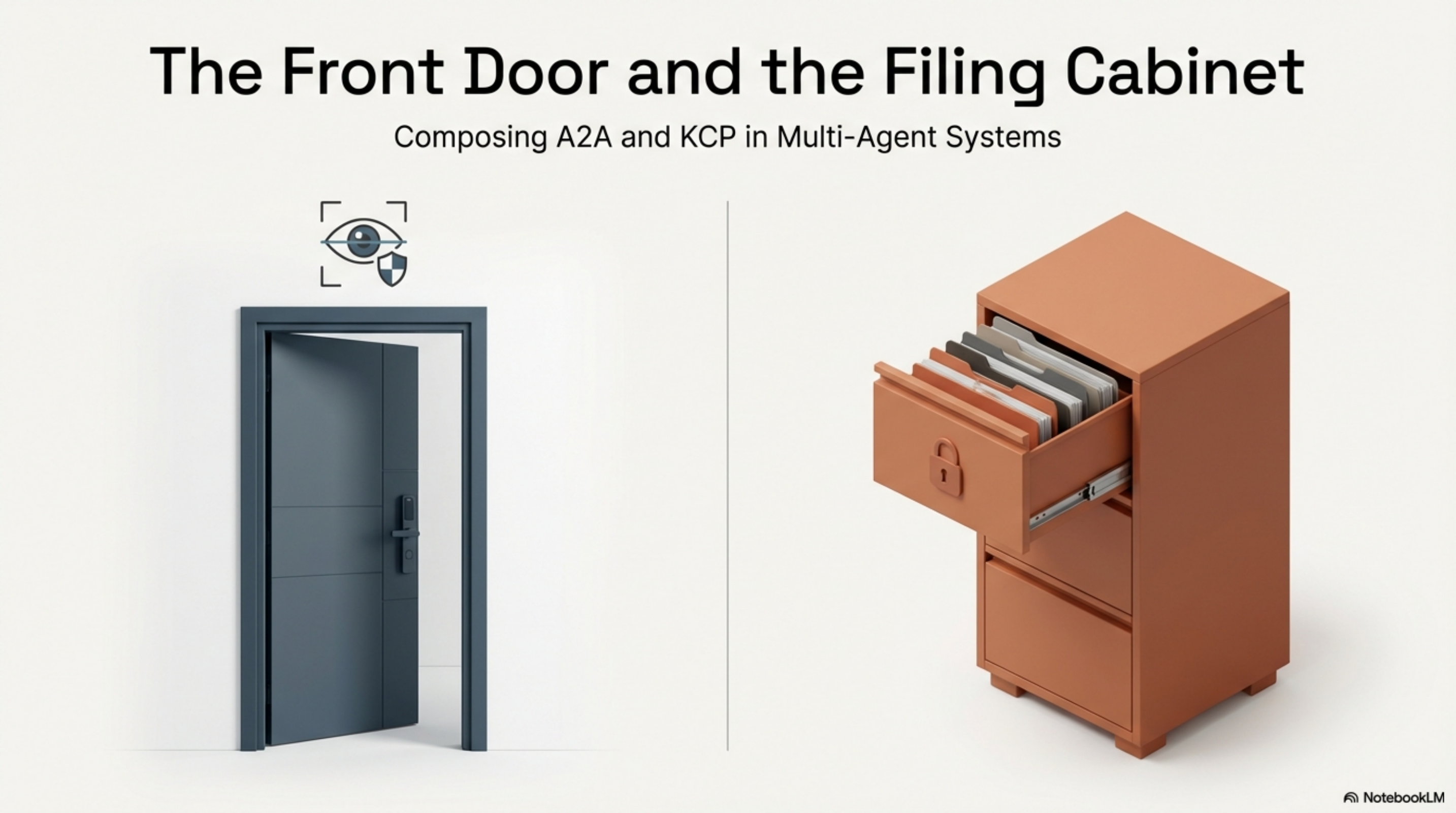
The Front Door and the Filing Cabinet: A2A Agent Cards Meet KCP

The Front Door and the Filing Cabinet: Composing A2A and KCP in Multi-Agent Systems

Multi-agent systems need two kinds of identity. The first answers "who is this agent and how do I call it." The second answers "what knowledge does this agent have and who is allowed to see each piece of it." Google's A2A protocol handles the first. KCP handles the second. They are not competitors. They are different layers of the same stack.

This post started as that explanation. Then, the same day it was published, we built four simulators and 150 adversarial tests against the spec. The tests found 8 concrete gaps. Those gaps are now driving KCP v0.7. The full story follows.

Skill-Driven Development vs Spec-Driven Development

Most teams using AI for development have settled on a workflow that looks roughly like this: write a detailed specification, feed it to the agent, review the output, iterate. It is disciplined. It is responsible. It works. And after six months of watching it in practice, I believe it has a structural limitation that becomes more expensive the longer you use it.

The limitation is not quality. Spec-driven development produces good output. The limitation is that every session starts from zero. The spec carries the knowledge. The agent carries nothing.

Six Weeks After the Sprint

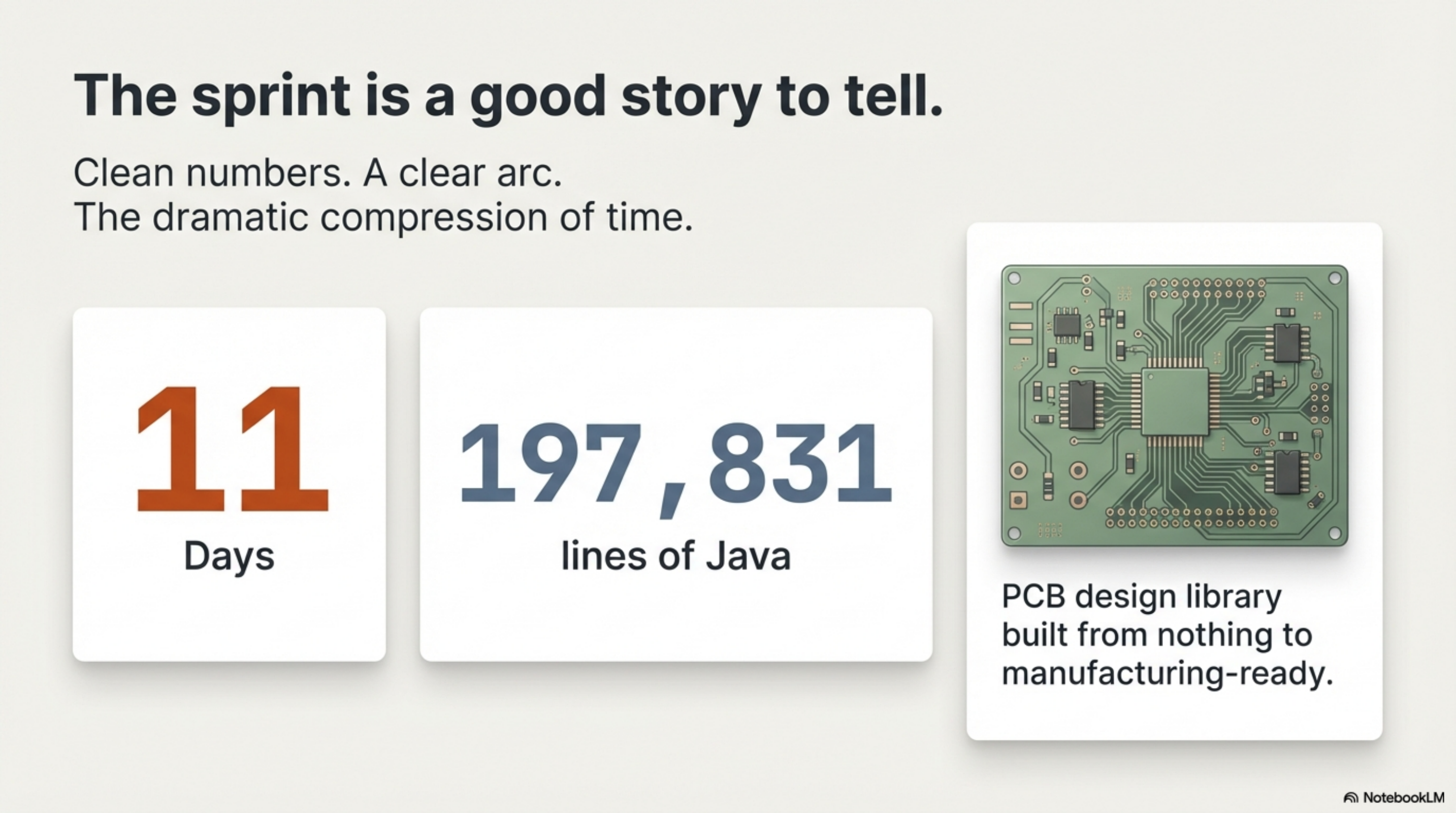
The sprint story is easy to tell.

Eleven days. 197,831 lines of Java. A PCB design library built from nothing to manufacturing-ready. Clean numbers, clear arc, dramatic compression of time.

The sprint — 11 days, 197,831 lines of Java, PCB design library built from nothing to manufacturing-ready

That was January 27. Six weeks ago.

Nobody asked what happened after. Which is the point.